
Marine Mammal Behavior in Relation to In-Water Pile Driving in Puget Sound, Washington, USA..
20th Biennial Conference on the Biology of Marine Mammals .
More details
Collapse details
Date Published:
Filesize:
- December 9, 2013
Marine mammal (MM) monitoring was conducted during inwater pile driving (PD) at Naval Base Kitsap Bangor, Washington in Hood Canal during Fall 2011. Vessel-based monitoring was performed on construction days, during both active-construction (“AC”, defined as 30 minutes prior to, during, and 30 minutes after PD) and non-construction (“NC”, downtime) periods. Baseline surveys were also conducted throughout Hood Canal on days when no PD occurred. Monitoring and baseline surveys occurred over 53 days, during which Marine Mammal Observers (MMOs) recorded 1,207 sightings totaling 2,269 individual MM. Species observed included California sea lion (Zalophus californianus), Steller sea lion (Eumetopias jubatus), harbor seal (Phoca vitulina), and harbor porpoise (Phocoena phocoena). Harbor seals were the most frequently observed MM on construction days (n=782 sightings) and baseline survey days (n=197 sightings). The only cetaceans observed were harbor porpoise (n=68 construction, 34 baseline sightings). Harbor seal sighting rates were lower on construction days than on baseline days (0.73 and 1.80 sightings/observer hour [obs hr], respectively). Likewise, harbor porpoise were sighted less often on construction days than on baseline days (0.13 and 0.31 sightings/obs hr, respectively). On construction days, harbor seal sighting rates were actually higher during AC periods than NC periods (3.31 and 0.23 sightings/obs hr, respectively). This is consistent with MMOs’ qualitative observations that harbor seals (particularly juveniles) appeared to be attracted to PD, and often moved towards the construction area when PD was initiated. On construction days, pinnipeds were most often observed “diving,” “looking,” “sinking,” and “swimming”. During AC, 4% more pinnipeds were observed “diving” vs. NC periods (n=124). On construction days, harbor porpoise were most often observed “traveling”. During AC, 27% fewer harbor porpoise were observed “traveling” vs. NC periods (n=18). Overall, minor behavioral disruptions were observed in relation to PD, and were within “take” numbers in the issued Incidental Harassment Authorization.
- 4,632.51 KB
Assessment of goose-beaked whale responses to mid-frequency active sonar using a hierarchical hidden Markov model.
Movement Ecology. 2026.
14 (28)
More details
Collapse details
Date Published:
- April 24, 2026
Diving Behavior of Common Bottlenose Dolphins Around the Main Hawaiian Islands: Individual Variation and Responses to Diel and Lunar Cycles.
Marine Mammal Science. 2026.
Volume 4217, Issue 3
More details
Collapse details
Date Published:
- July 26, 2026
Baleen whale responses to a high frequency active pinger: Implications for upper frequency hearing limits.
Journal of the Acoustical Society of America. 2016.
140(4, Part 2):3412
More details
Collapse details
Date Published:
Publication:Ocean:Region:Species:Methods:
- October 1, 2016
In order to test the possibility of using high frequency pinger tags to track baleen whales on Navy instrumented ranges, three blue (Balaenoptera musculus) and one humpback (Megaptera novaeangliaea) whales were exposed to two high frequency pingers. The pinger frequencies were 37 and 45 kHz, with estimated received levels between 106 and 134 dB re 1 lPa. The whales were monitored prior to the exposure in order to establish their behavioral state and to acclimate them to the presence of the boat. Two of the blue whales were deep feeding, while the third blue whale and the humpback whale were traveling with intermittent bouts of possible foraging near the surface. Each exposure lasted approximately 30—40 minutes, and the whales were observed for an additional two to three surfacing intervals post-exposure. None of the blue whales demonstrated any behavioral response. The humpback whale’s response was inconclusive, as other foraging animals entered the area at the same time; however, it is likely there was no response. These data may begin to provide information on the upper frequency limits of baleen whale hearing, as these species have responded to Navy sonar-like sounds at lower frequencies but similar received levels and behavioral states.
More details
Collapse details
Date Published:
Filesize:
- July 8, 2026
Two projects, one in the Atlantic Ocean and one in the Pacific Ocean, have simultaneously collected data from satellite-linked tags from a large number of short-finned pilot whales (Globicephala macrorhynchus; 54 from the Atlantic and 140 from the Pacific (50 from from Kaua’i), Tables 1 and 2). Pilot whales were exposed to MFAS in both areas, either opportunistically during a biannual training event at the Pacific Missile Range Facility (PMRF) in Hawai.i, or during controlled exposure experiments (CEEs) associated with the Atlantic Behavioral Response (BRS) project off Cape Hatteras, North Carolina, where experimentally simulated or operational SQS-53C sonars from surface warships were used (Figure 1). In addition, all tagged animals have some additional data known about their social relationships and context. Off Cape Hatteras this includes at minimum the number of other animals in the group they were tagged with and some photo-identification information about the associated population; off Kaua.i this includes information known about social network-derived relationships in the island-associated population and potential individual exposure histories. These data, along with newly developed spatial movement modeling techniques (Hanks et al., 2015; Johnson et al., 2021) adapted to satellite-linked tag data, create a natural experiment to evaluate and understand possible behavioral responses of shortfinned pilot whales to MFAS exposures in two different populations and environments.
- 644.89 KB
Acoustic monitoring of coastal dolphins and their response to naval mine neutralization exercises.
Royal Society. 2017.
4:170558
More details
Collapse details
Date Published:
Publication:Ocean:Region:Species:Methods:
- November 1, 2017
To investigate the potential impacts of naval mine neutralization exercises (MINEX) on odontocete cetaceans, a long-term passive acoustic monitoring study was conducted at a US Navy training range near Virginia Beach, USA. Bottom-moored acoustic recorders were deployed in 2012–2016 near the epicentre of MINEX training activity and were refurbished every 2–4 months. Recordings were analysed for the daily presence/absence of dolphins, and dolphin acoustic activity was quantified in detail for the hours and days before and after 31 MINEX training events. Dolphins occurred in the area year-round, but there was clear seasonal variability, with lower presence during winter months. Dolphins exhibited a behavioural response to underwater detonations. Dolphin acoustic activity near the training location was lower during the hours and days following detonations, suggesting that animals left the area and/or reduced their signalling. Concurrent acoustic monitoring farther away from the training area suggested that the radius of response was between 3 and 6 km. A generalized additive model indicated that the predictors that explained the greatest amount of deviance in the data were the day relative to the training event, the hour of the day and circumstances specific to each training event.
Journal of the Acoustical Society of America. 2016.
140(4, Part 2):3413
More details
Collapse details
Date Published:
Publication:Ocean:Region:Species:Methods:
- January 1, 2016
Opportunistic behavioral responses of baleen whales to disturbances from US Navy mid-frequency active sonar (MFAS) training at the Pacific Missile Range Facility, Kauai, Hawai’i, are being studied utilizing passive acoustic recordings. Automated passive acoustic detection, classification, localization, and tracking analyses of the data have shown a behavioral response in terms of a reduction, or cessation, of minke whale “boing” calling in response to US Navy training during the month of February 2011, 2012, and 2013 over a study area of 3,780 km2. The reduced calling is expressed as reduced minimum densities in the study area by utilizing acoustically localized individual whale counts. In February 2011, the density before sonar training was 3.64 whales while the density during sonar training was 0.69 whales (95% confidence intervals of 3.31-4.01 and 0.27- 1.8 whales, respectively). Individual ship-whale encounters have been observed to show cessation of calling from ship approaches without MFAS activity as well as ship approaches with MFAS. Sound Pressure Levels and Cumulative Sound Exposure Levels animals are exposed to are being estimated for evaluation of dose-response relationships. Tracking individual whales allows investigation of kinematics coupled with acoustic call details to establish baseline behaviors for comparison with observations during US Navy training.
Multi-scale behavioral response studies of cetaceans and MFAS along the US East Coast.
SEAMAMMS (Southeast and Mid-Atlantic Marine Mammal Symposium) .
More details
Collapse details
Date Published:
- April 7, 2017
- 335.12 KB
More details
Collapse details
Date Published:
Filesize:
- July 8, 2026
This annual progress report covers the 2025 field season and subsequent analyses. It provides a synthesis of experimental methods; field efforts; tagging results; and exposure-response results for two CEEs, including the second operational CAS CEE conducted with the United States Ship (USS) Donald Cook and the first-ever high-power experimental source CEE simulating CAS operations. It also includes a detailed analysis of the Kinéis satellite data receiving system relative to legacy ARGOS systems. Finally, it includes a synthesis of peer-reviewed papers that have been or are in the process of being published.
- 9,688.83 KB
Complete
Acoustic and Visual Survey for Cetaceans in Behm Canal and Southern Clarence Strait, Alaska
Project Objectives
Conduct visual line-transect surveys and passive acoustic monitoring for cetaceans, and other marine mammals, to determine species occurrence, and to estimate density within Navy’s testing range. Acoustic monitoring devices will be deployed during the vessel based survey, and long-term passive acoustic hydrophones will be monitored for year-round detection of rare and/or cryptic cetacean species.
Complete
Aerial Surveys of Marine Mammals Conducted in the Inland Puget Sound Waters of Washington, summer 2013 – winter 2016
Project Objectives
1) Conduct aerial surveys during four seasonal periods within the inland Puget Sound Survey Area to assess potential differences in seasonal distribution, numbers, and behavioral state patterns of marine mammals; 2) Collect data to estimate densities of marine mammals in the inland Puget Sound waters for species with sufficient sightings; 3) Estimate abundance for each marine mammal species seen an adequate number of times; 4) Document the distribution and habitat use of each species observed; 5) Document and describe behaviors seen without performing focal follows.
Current
Gulf of Alaska Acoustic Moorings and Analysis
Project Objectives
Conduct systematic line transect survey for marine mammals for density estimates; conduct survey to determine ecotype identity of killer whales; analyze existing and newly collected data for seasonal occurrence, abundance, and density of cetacean
Current
Long Term Acoustic Monitoring of Marine Mammals Utilizing the Instrumented Range at Pacific Missile Range Facility (PMRF)
Project Objectives
Improve understanding of the long term trends in occurrence of marine mammals (e.g., minke, humpback, fin, Bryde's, Blainville's) on the PMRF range. Examine what, if any, acoustic and physical behavioral responses occur to Navy activities.
Complete
Mariana Islands Sea Turtle and Cetacean Survey (MISTICS)
Project Objectives
Determine what species of marine mammals and sea turtles are present and estimate abundance.
Current
Monitoring Cetaceans in Hood Canal
Project Objectives
This 12‑month integrated pilot project combines three complementary components: (A) shore‑based theodolite monitoring of harbor porpoises, (B) high‑bandwidth passive acoustic monitoring and soundscape characterization, and (C) suction‑cup multi‑sensor tag deployments on Bigg’s (transient) killer whales. Together, these data streams will quantify occurrence, movement, diving, and behavioral context for these two key species in relation to the local soundscape—including operational signals near the Dabob Bay Range Complex (DBRC) and the Bangor Trident Base. Results can provide an empirical foundation and inform the study design of future cetacean behavioral response studies (BRS) in Hood Canal.
Complete
Offshore Distribution of Southern Resident Killer Whales in the Pacific Northwest
Project Objectives
1) Identify and classify Southern Resident killer whale (SRKW) detections from acoustic recorders and satellite tag tracking; 2) Develop a model to estimate the seasonal and annual occurrence patterns of southern resident killer whales relative to offshore Navy training ranges. 3) Characterize occurrence of anthropogenic sounds in potential SRKW habitat. 4) Develop state space habitat model for SRKW prey, based on fall Chinook salmon tagged released from California to British Columbia between 1977 and 1990 to estimate seasonal distribution along the west coast.
Current
Pacific Marine Assessment Program for Protected Species (PACMAPPS) survey
Project Objectives
Identify species of beaked whales, odontocetes, and baleen whales that occur in the surveyed areas; Monitor marine mammal and sea turtle presence, distribution, and diversity in offshore waters; Develop a better understanding of marine mammal distribution, movement patterns, habitat use, population structure, and abundance; Develop reference library of visually-validated acoustic recordings of marine mammals.
Current
Salmonid and Southern Resident Killer Whale Distribution in the Pacific Northwest
Project Objectives
1) Determine the occurrence of bull trout within and near the boundaries of the NWTT; 2) Determine the spatiotemporal occurrence of killer whale and baleen whale in the NWTT; 3) Characterize the occurrence of endangered fish species within the NWTT
Complete
Vessel-based Marine Mammal Surveys in Puget Sound, Washington
Project Objectives
Conduct marine mammal in-water vessel-based line transect surveys in the Puget Sound basin to: 1) Record data on all marine mammal species seen with the study area, with a focus on the killer whale (Orcinus orca) and the harbor porpoise (Phocoena phocoena). 2) Identify the seasonal occurrence and abundance/density of cetaceans within the study area. 3) Identify the effects of environmental variables on the distribution and abundance of species in the study area.
Killer Whale Ecotype Study (KWEST) kicks off
July 27, 2026
Research scientists from the University of Washington and NOAA recently departed from Kodiak, AK aboard the R/V Aquila for a 2-month research cruise focused on distinct groups of killer whales, or ecotypes, that hunt different prey and travel in different parts of the Gulf of Alaska.
Kauai' Field Work Updates
February 16, 2024
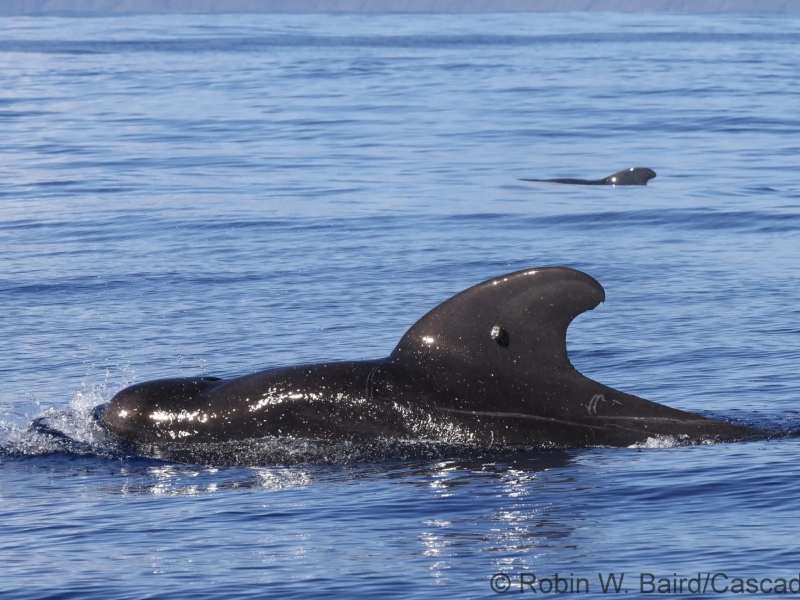
Scientists from Cascadia Research Collective are leading a ~9-day field project off Kaua’i that started on February 11th.