
Mesoplodon mysterioso
June 13, 2024
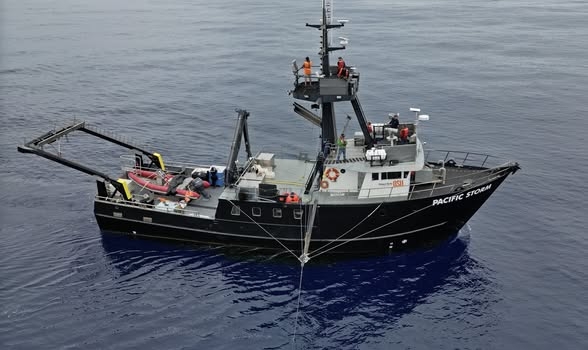
We are thrilled to be part of the "Mystery Mesoplodon Expedition" off the west coast of Baja California searching for an elusive new species of beaked whale. Read about the initial discovery and stay tuned for updates on this exciting expedition!
No related projects to display
More details
Collapse details
Date Published:
Filesize:
- July 1, 2012
Two ecological acoustic recorders (EARs) were deployed on July 17, 2010, one at a depth of 800 meters (m) off the northwest coast (21° 59.613' N, 160° 12.167' W), and the other at a depth of 16 m off the southeast coast of Ni'ihau (21° 47.306' N, 160° 11.964' W). These two sites were selected by personnel from the Naval Facilities Engineering Command, Pacific to provide acoustic data during the 2010 Rim of the Pacific (RIMPAC) exercise in the Hawaii Range Complex.
- 1,006.87 KB
Studying the biosonar activities of deep diving odontocetes in Hawaii and other western Pacific locations.
Journal of the Acoustical Society of America. 2014.
136(4,Part 2):2,246
More details
Collapse details
Date Published:
Publication:Ocean:Region:Species:Methods:
- October 31, 2014
Ecological acoustic recorders (EARs) have been deployed at several locations in Hawaii and in other western Pacific locations to study the foraging behavior of deep-diving odontocetes. EARs have been deployed at depths greater than 400 m at five locations around the island of Kauai, one at Ni’ihau, two around the island of Okinawa, and four in the Marianas (two close to island of Guam, one close to the island of Saipan and another close to the island of Tinian).
More details
Collapse details
Date Published:
Filesize:
- January 1, 2024
NOAA Fisheries Science Centers have recently incorporated drifting acoustic spar buoy recorders (DASBRs) into their standard large-scale survey designs. Drifting autonomous instruments have many advantages, especially for species that are difficult to see at the surface, are vocal at depth, and whose sounds have been well characterized such that they can be readily identifiable from autonomous recordings. Pacific Islands Fisheries Science Center deployed DASBRs throughout the survey region with the goal of collecting data on the occurrence of beaked whales and other cryptic deepdivers. Traditional line-transect assessments for those species are often challenged by very low encounter rates, resulting in density and abundance estimates with high uncertainty, or in some cases, no estimates if groups were not seen during the ‘on-effort’ portions of the survey. Previous experience in the Marianas suggested that encounter rates for beaked whales on the DASBRs would be orders of magnitude higher within the DASBR data than in the visual survey or towed array datasets, likely enabling examination of density for some beaked whale species using the newly developed methods of Barlow et al. (2021a). Here, we detail our methodology to estimate density and abundance using 2021 survey dataset and how 2018 survey data were used to inform the detection parameters. This analysis has resulted in the first preliminary acoustic density and abundance estimates for Cuvier’s and Blainville’s beaked whales in the Mariana Islands region.
- 1,395.83 KB
More details
Collapse details
Date Published:
- June 3, 2024
- 479.73 KB
Long-term monitoring of Ziphius cavirostris behavior using 3D tracking from fixed hydrophone arrays off Southern California.
Scientific Reports. 2025.
15: 40859 (2025)
More details
Collapse details
Date Published:
- November 19, 2025
More details
Collapse details
Date Published:
Filesize:
- July 17, 2015
The purpose of this report is to summarize information obtained through the remote deployment of Low-Impact Minimally-Percutaneous External-electronics Transmitter (LIMPET) satellite tags on odontocete cetaceans off Cape Hatteras, North Carolina, in 2014. This study was undertaken to provide information on spatial use and diving behavior of a number of species of odontocetes, with particular emphasis on Cuvier’s beaked whales (Ziphius cavirostris) and short-finned pilot whales (Globicephala macrorhynchus).
- 2,545.14 KB
More details
Collapse details
Date Published:
Filesize:
- July 28, 2016
The present work is intended to complement ongoing research by Duke University off Cape Hatteras (hereinafter referred to as the Duke program) by providing information on the movement and diving behavior of these species over the medium term (weeks to months). The Duke program is focusing on shorter-term dive behavior (i.e., hours to days) using Digital Acoustic Tags and longer-term movements (i.e., months to years) using photo-identification (photo-ID) techniques
- 5,058.82 KB
More details
Collapse details
Date Published:
Filesize:
- August 1, 2017
. This report summarizes information obtained through additional field efforts undertaken in 2016, while incorporating results from the first two years of effort. The present work is intended to complement ongoing research by Duke University off Cape Hatteras (hereinafter referred to as the Duke program) by providing information on the movement and diving behavior of these species over the medium term (weeks to months)
- 11,433.38 KB
More details
Collapse details
Date Published:
Filesize:
- March 1, 2018
This work builds upon and complements longer-term studies of movements and site fidelity of both Cuvier’s beaked whales (Ziphius cavirostris) and short-finned pilot whales (Globicephala macrorhynchus) off the North Carolina coast using photo-identification (photo-ID)
- 4,344.84 KB
More details
Collapse details
Date Published:
Filesize:
- June 1, 2019
This work builds upon and complements longer-term studies of movements and site fidelity of both Cuvier’s beaked whales (Ziphius cavirostris) and short-finned pilot whales (Globicephala macrorhynchus) off the North Carolina coast using photo-identification (photo-ID)
- 2,642.94 KB
Effects of Navy sonar on whales and dolphins in the Hawaiian Islands: some data, some speculation, some gaps..
Presentation to the Hawaiian Islands Humpback Whale National Marine Sanctuary Advisory Council (virtual event) .
More details
Collapse details
Date Published:
- September 15, 2020
- 5,898.74 KB
A Comparison of Diving Behavior of Goose-beaked Whales and Dense-beaked Whales From Tagging Studies in Multiple Ocean Basins.
Marine Mammal Science. 2025.
mms70070
More details
Collapse details
Date Published:
- September 17, 2025
Variation in dive behavior of Cuvier's beaked whales with seafloor depth, time-of-day, and lunar illumination.
Marine Ecology Progress. 2020.
644:199–214
More details
Collapse details
Date Published:
- January 1, 2020
Recommended snapshot length for acoustic point-transect surveys of intermittently available Cuvier's beaked whales.
Journal of the Acoustical Society of America. 2021.
149(6):3830–3840
More details
Collapse details
Date Published:
Publication:Ocean:Region:Species:Methods:
- June 3, 2021
Acoustic point-transect distance-sampling surveys have recently been used to estimate the density of beaked whales. Typically, the fraction of short time “snapshots” with detected beaked whales is used in this calculation. Beaked whale echolocation pulses are only intermittently available, which may affect the best choice of snapshot length. The effect of snapshot length on density estimation for Cuvier's beaked whale (Ziphius cavirostris) is investigated by sub-setting continuous recordings from drifting hydrophones deployed off southern and central California. Snapshot lengths from 20 s to 20 min are superimposed on the time series of detected beaked whale echolocation pulses, and the components of the density estimation equation are estimated for each snapshot length. The fraction of snapshots with detections, the effective area surveyed, and the snapshot detection probability all increase with snapshot length. Due to compensatory changes in these three components, density estimates show very little dependence on snapshot length. Within the range we examined, 1–2 min snapshots are recommended to avoid the potential bias caused by animal movement during the snapshot period and to maximize the sample size for estimating the effective area surveyed.
Beaked whales and El Niño: evidence for ENSO effects on Blainville’s beaked and goose-beaked whale space use in Hawaiian waters.
Marine Ecology Progress. 2024.
751:189–209.
More details
Collapse details
Date Published:
- December 19, 2024
A comparative spatial analysis of location data from satellite-tagged Blainville’s (Mesoplodon densirostris) and Cuvier’s (Ziphius cavirostris) beaked whales off Hawaii Island..
26th Annual Meeting of the Northwest Student Chapter of the Society for Marine Mammalogy, May 6, 2023, Newport, Oregon .
More details
Collapse details
Date Published:
- May 6, 2023
- 5,049.97 KB
More details
Collapse details
Date Published:
Filesize:
- July 1, 2018
Passive acoustic monitoring was conducted in the Navy’s Southern California Range Complex from January 2013 to June 2017 to detect marine mammal sounds. High-frequency Acoustic Recording Packages (HARPs) recorded sounds between 10 Hz and 100 kHz at four locations: west of San Clemente Island (1,000 m depth, site H), south of San Clemente Island (1200 m depth, site N), northwest of San Clemente Island (900 m depth, site M) and west of La Jolla, California (500 m depth, site P).
- 5,309.48 KB
More details
Collapse details
Date Published:
Filesize:
- February 1, 2018
We present progress on the development of methods to investigate the potential impacts of sonar and other anthropogenic activities on calling animals. The basis for this effort is previously collected PAM data from four sites in the years 2006 to 2015. Recording effort at these sites varied between 674 and 2,284 days per site, resulting in 19 years of cumulative acoustic recording during 79 instrument deployments and 227 TB of acoustic recordings. As part of the work in this progress report, automated routines have been established and/or modified to detect and classify acoustic signals of blue whales (Balaenoptera musculus) and Cuvier’s beaked whales (Ziphius caviostris) as well as Mid-Frequency Active (MFA) sonar pings and explosions.
- 1,935.86 KB
More details
Collapse details
Date Published:
Filesize:
- March 1, 2016
Passive acoustic monitoring (PAM) provides extensive datasets to examine the behavioral response of cetaceans to anthropogenic sound. Using broadband passive acoustic monitoring, the full range of cetacean sounds and the sounds of naval and other anthropogenic sources are recorded. We have been collecting high-frequency PAM data in the Southern California (SOCAL) region since 2006. Within this dataset are many instances of anthropogenic sound as well as cetacean presence at the locations of naval training.
- 9,064.92 KB
Beaked whale species occurrence in the central Pacific and their relation to oceanographic features.
Journal of the Acoustical Society of America. 2016.
140(4,Part 2):3017
More details
Collapse details
Date Published:
Publication:Ocean:Region:Species:Methods:
- October 1, 2016
Mesoscale oceanographic features are a major force in structuring the marine environment through processes such as eddy-induced upwelling, and as such effect distribution and aggregation patterns of all organisms along the food chain. It has been shown that top pelagic predators such as cetaceans react to these environmental changes in different ways. We present analysis of frequency-modulated (FM) echolocation pulses of Cuvier’s beaked whale (Ziphius cavirostris), Blainville’s beaked whale (Mesoplodon densirostis), and an unknown beaked whale species producing FM pulse type “BWC,” possibly ginkgo-toothed beaked whale (M. ginkgodens), at five locations in the central Pacific. The recordings were collected at Pearl and Hermes Reef (Northwestern Hawaiian Islands), Kona (Main Hawaiian Islands), Wake Atoll, Tinian, and Saipan (Northern Mariana Islands) between 2008 and 2015, ranging from 4 to 8 years per site. All three beaked whale species were present at all sites in different proportions throughout the recording periods, with a strong nocturnal pattern only for the “BWC” pulse type, yet without seasonal pattern. We examine the varying presence in the context of remotely sensed oceanographic data, including sea surface height deviation, temperature, and salinity, as well as chlorophyll a and derived primary productivity.
Impact of mid-frequency active sonar on beaked whale echolocation from long-term passive acoustic recordings..
ESOMM-2018, 6th International Meeting on the Effects of Sounds in the Ocean on Marine Mammals, The Hague, The Netherlands, 9-14 September 2018 .
More details
Collapse details
Date Published:
- September 9, 2018
- 557.82 KB
More details
Collapse details
Date Published:
Filesize:
- December 1, 2020
The overall goal of this study was to include the 2018 survey data in the previous 1991–2014 modeling dataset in order to improve SMDs for the CCE study area. Specific objectives included: Generating multi-year average density surfaces for the Navy and others to use in their long-term (2–7 year) environmental planning efforts; and Providing updated abundance and “minimum population size (Nmin)” estimates as defined in the Guidelines for Assessing Marine Mammal Stocks (National Oceanic and Atmospheric Administration 2016).
- 5,465.27 KB
Line-transect Abundance Estimates of Cetaceans in U.S. Waters around the Hawaiian Islands in 2002, 2010, and 2017.
NOAA technical memorandum NMFS PIFSC. 2021.
115. https://doi.org/10.25923/daz4-kw84
More details
Collapse details
Date Published:
Publication:Ocean:Region:Species:
- January 1, 2021
The Hawaiian Islands Cetacean and Ecosystem Assessment Survey (HICEAS) is a recurring ship-based, line-transect survey designed to estimate cetacean abundance in the entirety of the Hawaiian EEZ.
- Blue whale
- Bryde's whale
- Humpback whale
- Minke whale
- Sei whale
- Blainville's beaked whale
- Bottlenose dolphin
- Goose-beaked whale
- False killer whale
- Fraser's dolphin
- Killer whale
- Longman’s beaked whale
- Melon-headed whale
- Pygmy killer whale
- Risso's dolphin
- Rough-toothed dolphin
- Short-finned pilot whale
- Sperm whale
- Spinner dolphin
- Spotted dolphin
- Striped dolphin
Adult male Cuvier's beaked whales (Ziphius cavirostris) engage in prolonged bouts of synchronous diving.
Marine Mammal Science. 2021.
https://doi.org/10.1111/mms.12799
More details
Collapse details
Date Published:
Publication:Ocean:Region:Species:Methods:
- March 15, 2021
We tested this prediction by evaluating the diving behavior of animals within social groups off Cape Hatteras, North Carolina, considering diving synchrony a proxy for group membership.
Trade-offs in telemetry tag programming for deep-diving cetaceans: data longevity, resolution, and continuity.
Animal Biotelemetry. 2023.
11:23
More details
Collapse details
Date Published:
Publication:Ocean:Region:Species:Methods:
- May 29, 2023
We analyze trade-offs in the longevity, resolution, and continuity of data records from non-recoverable satellite-linked tags on deep-diving Ziphius cavirostris in the context of a behavioral response study of acute noise exposure.
Targeted surveillance detected novel beaked whale circovirus in ten new host cetacean species across the Pacific basin.
Frontiers in Marine Science. 2023.
9:945289
More details
Collapse details
Date Published:
Publication:Ocean:Region:Species:Methods:
- January 25, 2023
The first cetacean circovirus, beaked whale circovirus (BWCV), was recently reported in a Longman’s beaked whale (Indopacetus pacificus) stranded in Hawai‘i and represents an emergent disease with unknown population impacts. In other species, circovirus infection may cause mortality or opportunistic co-infection by other pathogens. We report on a targeted surveillance of stranded cetaceans in the Pacific basin, including archived beaked whale species, strandings where pathological findings suggested disease presence, mass stranded animals, and additional individuals to represent a broad range of Hawaiian cetacean species. Archived tissues primarily from the brain, kidney, liver, lung, spleen, and lymph nodes of individuals stranded between 2000 and 2020 (n=30) were tested by PCR for the presence of BWCV.
Use of Passive Acoustic Monitoring to assess beaked whale distribution and habitat use in the Gulf of Alaska.
Southern California Marine Mammal Workshop 2014 .
More details
Collapse details
Date Published:
Filesize:
- January 31, 2014
Beaked whales are among the most poorly understood marine mammals. They are deep-diving odontocetes, spending most of their time submerged with infrequent, short surface intervals. Due to this behavior, they are difficult to study using visual observation methods alone . However, recent advancements in passive acoustic detection and survey techniques have shown to provide viable methods for stu dying beaked whales (Yack et al. 2013). In the Gulf of Alaska (GOA), there is little known abo ut beaked whale abundance and distribution.
- 1,726.45 KB
Insights into foraging behavior from multi-day sound recording tags on goose-beaked whales (Ziphius cavirostris) in the Southern California Bight.
Frontiers in Marine Science. 2024.
11:1415602
More details
Collapse details
Date Published:
- September 6, 2024
Identification of western North Atlantic odontocete echolocation click types using machine learning and spatiotemporal correlates.
PLOS One. 2022.
17(3): e0264988
More details
Collapse details
Date Published:
Publication:Ocean:Region:Species:Methods:
- March 24, 2022
A combination of machine learning and expert analyst review was used to detect odontocete echolocation clicks, identify dominant click types, and classify clicks in 32 years of acoustic data collected at 11 autonomous monitoring sites in the western North Atlantic between 2016 and 2019. Previously-described click types for eight known odontocete species or genera were identified in this data set: Blainville’s beaked whales (Mesoplodon densirostris), Cuvier’s beaked whales (Ziphius cavirostris), Gervais’ beaked whales (Mesoplodon europaeus), Sowerby’s beaked whales (Mesoplodon bidens), and True’s beaked whales (Mesoplodon mirus), Kogia spp., Risso’s dolphin (Grampus griseus), and sperm whales (Physeter macrocephalus)
Multi-regional comparison of scarring and pigmentation patterns in Cuvier’s beaked whales.
Mammalian Biology. 2022.
102:733–750
More details
Collapse details
Date Published:
Publication:Ocean:Species:Methods:
- April 1, 2022
This study supports the notion that scarring density is indicative of sex for this species, improves the predictive capacity of this metric inter-regionally, and provides a reliable method to estimate the sex of whales in a typical photo-ID catalog, thus supporting vital rate assessments for this data-deficient species.
More details
Collapse details
Date Published:
Filesize:
- August 1, 2017
This report forms part of a multi-institutional monitoring project intended to provide information on the species composition, population identity, density, and baseline behavior of marine mammals and sea turtles present in United States (U.S.) Navy range complexes along the U.S. Atlantic Coast.
- 11,346.94 KB
More details
Collapse details
Date Published:
Filesize:
- September 1, 2015
This report forms part of a multi-institutional monitoring project intended to provide information on the species composition, population identity, density, and baseline behavior of marine mammals and sea turtles present in United States (U.S.) Navy range complexes along the U.S. Atlantic Coast.
- 26,430.91 KB
Abundance, survival, and annual rate of change of Cuvier's beaked whales (Ziphius cavirostris) on a Navy sonar range.
Marine Mammal Science. 2020.
37(2): 399-419
More details
Collapse details
Date Published:
- September 22, 2020
Abundance, survival, and annual rate of change of Cuvier's beaked whales (Ziphius cavirostris) on a Navy sonar range.
Marine Mammal Science. 2019.
37(2): 399-419
More details
Collapse details
Date Published:
Publication:Ocean:Region:Species:Methods:
- April 1, 2019
Bayesian mark-recapture estimates of survival, abundance, and trend are reported for Cuvier's beaked whales (Ziphius cavirostris) using a Navy training range off southern California. The deep-diving beaked whale family is exceptionally vulnerable to mid-frequency active sonar (MFAS), which has been implicated in mass strandings and altered foraging behavior. Extremely low sighting probabilities impede studies of population-level impacts of MFAS on beaked whales. The San Nicolas Basin hosts a Navy training range subject to frequent MFAS use and attracts high densities of Z. cavirostris. An 11-year (2007–2018) photo-identification program leveraged automated acoustic detection and location capabilities on the range's 1,800-km2 hydrophone array to enhance capture probability.
Habitat utilization by beaked whales in the western North Atlantic Ocean using passive acoustics.
Marine Ecology Progress. 2025.
754:137-153
More details
Collapse details
Date Published:
- February 13, 2025
More details
Collapse details
Date Published:
Filesize:
- June 1, 2014
Passive acoustic monitoring was conducted to detect the presence of marine mammal and anthropogenic sounds in the Navy’s Northwest Training Range Complex (NWTRC) from September 14, 2012 until June 30, 2013. High-frequency Acoustic Recording Packages (HARPs) recorded sounds between 10 Hz and 100 kHz at the shelf slope near Quinault Canyon. Data analysis methods consisted of detection of sounds by analyst scans of long-term spectral averages (LTSAs) and spectrograms, and by automated computer algorithms when possible. The data were divided into three frequency bands for analysis of marine mammal vocalizations and anthropogenic sounds.
- 16,828.02 KB
More details
Collapse details
Date Published:
Filesize:
- November 1, 2014
Passive acoustic monitoring was conducted in the Gulf of Alaska Temporary Maritime Activities Area (GATMAA) from June 2013 to May 2014 to detect marine mammal and anthropogenic sounds. High-frequency Acoustic Recording Packages (HARPs) recorded sounds between 10 Hz and 100 kHz at five locations: a shelf site offshore Kenai Peninsula (200 m depth, site CA), a continental slope site in deep water (850 m depth, site CB), a slope site offshore Kodiak Island (230 m depth, site KO), a deep offshore site at Pratt Seamount (1000 m depth, site PT), and a deep offshore site at Quinn Seamount (930 m depth, site QN).
- 15,262.96 KB
Passive Acoustic Monitoring for Marine Mammals in the SOCAL Naval Training Area Dec 2012 – Jan 2014.
More details
Collapse details
Date Published:
Filesize:
- January 1, 2015
Passive acoustic monitoring was conducted in the Navy’s Southern California Range Complex from December 2012 to January 2014 to detect marine mammal and anthropogenic sounds. High-frequency Acoustic Recording Packages (HARPs) recorded sounds between 10 Hz and 100 kHz at three locations: near Santa Barbara Island (880 m), west of San Clemente Island (1000 m), and southwest of San Clemente Island (1300 m). Six baleen whale species were recorded: blue whales, Bryde’s whales, fin whales, gray whales, humpback whales, and minke whales.
- 21,128.75 KB
More details
Collapse details
Date Published:
Filesize:
- January 1, 2015
Passive acoustic monitoring was conducted in the Navy’s Southern California Range Complex from January to July 2014 to detect marine mammal and anthropogenic sounds. High-frequency Acoustic Recording Packages (HARPs) recorded sounds between 10 Hz and 100 kHz at three locations: west of San Clemente Island (1,000 m depth, site H), southwest of San Clemente Island (1,200 m depth, site N), and west of La Jolla, California (550 m depth, site P). Sites H and N are located offshore, whereas site P is located nearer to the coast.
- 6,272.07 KB
More details
Collapse details
Date Published:
Filesize:
- February 1, 2014
Passive acoustic monitoring was conducted within the Navy’s Cherry Point OPAREA during August – December 2011 and July – October 2012 for a total of 105 and 81 days respectively. This site is located approximately 100 miles from the North Carolina coastline on the shelf break. The 2011 deployment was at a water depth of 952 m and the 2012 deployment was at a water depth of 914 m. Acoustic data collected at this site provide information on the presence of marine mammals and anthropogenic sound sources. High-frequency Acoustic Recording Packages (HARPs) recorded sounds between 10 Hz and 100 kHz with recording cycles of 5 minutes every 10 minutes. The data were divided into three frequency bands and data were analyzed by scans of long-term spectral averages and spectrograms. Four baleen whale species were recorded: blue, fin, minke, and sei whales. The detections of their calls were made between late August and early December 2011. Blue whale calls were the only baleen whale call type detected in the 2012 deployment. No Bryde’s, humpback, or North Atlantic right whale calls were detected in either deployment. Several different toothed whale species were recorded: Blainville’s, Cuvier’s, and Gervais’ beaked whales, killer whales, pygmy or dwarf sperm whales (Kogia spp.), Risso’s dolphins, sperm whales, and unidentified odontocetes. All species except killer whales were recorded in 2011 and 2012. Killer whales were detected only in 2011. Ship noise was the most common anthropogenic sound in both deployments. MFA was noted during both deployments. A total of 391 pings were detected in 2011 with a maximum peak-to-peak received level of 156 dB re 1 μPa. In 2012, a total of 492 pings were detected with a maximum peak-to-peak received level of 167 dB re 1 μPa. Few echosounder pings over a variety of frequencies (4-80 kHz) were detected during both deployments. Explosions were detected in both deployments, though they were more prevalent in 2011 than 2012. High noise levels, possibly caused by instrument strumming and fluid flow at the sensor, occurred intermittently in both deployments and likely decreased the detection range for low-frequency sounds. This strumming was most prevalent in 2012.
- 13,075.42 KB
More details
Collapse details
Date Published:
Filesize:
- January 1, 2011
Navy Research Funded Year Three Project Reports
- 5,699.30 KB
More details
Collapse details
Date Published:
Filesize:
- June 17, 2012
This document contains amplifying technical data and information for the United States Department of the Navy’s Southern California Range Complex Comprehensive Monitoring Report.
- 51,916.96 KB
Effects of simulated military sonar on sound production by blue whales, sperm whales, Risso’s dolphin, and Cuvier’s beaked whale.
4th International Science Symposium on Bio-logging .
More details
Collapse details
Date Published:
Filesize:
- March 14, 2011
Whales and dolphins use sound for different functions including echolocation and social communication, and thus changes in sound production patterns are a likely component of any behavioral response to anthropogenic sounds such as military mid-frequency sonar (MFA). To simultaneously log whale and dolphin movements, sound production and reception, and anthropogenic sound exposure levels, we used Dtags (Woods Hole Oceanographic Institution) and bioacoustic probes (Greeneridge Sciences). Tags were deployed on wild, free-ranging cetaceans in Southern California waters. Tagged animals were then exposed to simulated MFA or, as a control, pseudo-random noise (PRN). In total, the August-September 2010 SoCal10 behavioral response study included 28 playbacks: 19 to blue whales (11 MFA, 8 PRN), 5 to fin whales (3 MFA, 2 PRN), 2 to a single sperm whale (1 MFA, 1 PRN), 1 to a Risso’s dolphin (MFA), and 1 to a Cuvier’s beaked whale (MFA). For this analysis we focus first on baleen whale call production and reception rates (particularly blue whale D calls and variable calls) in relation to sound exposure level, dive behavior, and lunge feeding rates. We then examine echolocation-based foraging behavior and social call production by the toothed whales as a function of sound exposure level. This rich dataset, including multiple cetacean species of conservation concern, provides insight into the wide potential range of responses to sound, and the dependence of those responses on ecological, social and behavioral context. Investigations like SoCal10 can help guide inferences for related topics, such as assessment of population effects of anthropogenic noise.
- 22.83 KB
Assessment of goose-beaked whale responses to mid-frequency active sonar using a hierarchical hidden Markov model.
Movement Ecology. 2026.
14 (28)
More details
Collapse details
Date Published:
- April 24, 2026
More details
Collapse details
Date Published:
Filesize:
- January 2, 2022
In the Pacific the Marine Mammal Monitoring on Navy Ranges (M3R) program maintains systems that automatically detect, classify and localize marine mammals in real-time on the U.S. Navy’s deep-water Southern California Antisubmarine Warfare Range (SOAR) in Southern California and Pacific Missile Range Facility (PMRF) off Hawai’i. Long-term archive data collected on these ranges allows for numerous types of studies on species inhabiting the ranges, including the monitoring of abundance and distribution, behavioral responses to naval activities, and habitat usage. They also provide the opportunity to study ambient noise and soundscapes.
- 4,891.60 KB
More details
Collapse details
Date Published:
Filesize:
- June 8, 2020
Beaked whale abundance and vocal behavior were examined at two different U. S. Navy training ranges: for Cuvier’s beaked whale (Ziphius cavirostris) at the Southern California Anti-Submarine Warfare Range (SOAR) between August 2010 through October 2019, and for Blainville’s beaked whales (Mesoplodon densirostris) at the Pacific Missile Range Facility (PMRF) between 2015 and 2018. The yearly and monthly abundance, mean number of group vocal periods (GVPs), mean duration of the GVPs in minutes, and the mean number of clicks detected per beaked whale group were calculated.
- 6,542.98 KB
More details
Collapse details
Date Published:
Filesize:
- January 1, 2019
Cuvier’s beaked whale abundance estimates have been obtained at the U.S. Navy’s Southern California Anti-Submarine Warfare Range (SOAR) for the period from August 2010 through November 2018. Data for December 2018 through January 2019 are currently being processed. The data were corrected for effort and spatial variation by applying correction factors as in DiMarzio et al (2017). Since 2010, the Cuvier’s beaked whale abundance at SOAR appears to be stable or slightly increasing.
- 2,763.10 KB
More details
Collapse details
Date Published:
Filesize:
- July 26, 2018
In 2016, corrected Cuvier’s beaked whale (Ziphius cavirostris, Zc) abundance estimates at SOAR were completed for 2010 -2014. The estimates showed no decline in abundance over this 5-year period on the instrumented Southern California Anti-Submarine Warfare Range (SOAR). In 2017, these estimates were updated with data from 2015 through September of 2017 to provide a yearly estimate from 2010 to 2017. Periods of node or in-water hardware outages in past estimates and new data were isolated. Correction factors for these periods were calculated, and revised abundance estimates were produced. As before, the data do not show a decline in abundance on SOAR over the last eight years.
- 1,913.22 KB
More details
Collapse details
Date Published:
Filesize:
- February 1, 2021
In FY20 the M3R program had six areas of focus for SOAR and PMRF: 1) long‐term data collection and the evaluation of abundance and distribution of Cuvier’s beaked whales at SOAR and Blainville’s beaked whales at PMRF; 2) the effect of two types of mid‐frequency active sonar (MFAS), hull‐mounted and dipping sonar, on Cuvier’s beaked whales at SOAR and Blainville’s beaked whales at PMRF; 3) evaluation of the M3R low‐frequency detector algorithm at SOAR; 4) determination of Autogrouper detection statistics for Blainville’s beaked whales at PMRF; 5) the development of tools to automatically characterize the ambient noise at SOAR using archive files; and 6) the support of on‐site field exercises at SOAR and PMRF with real‐time monitoring using the M3R system.
- 3,651.01 KB
More details
Collapse details
Date Published:
Filesize:
- May 3, 2025
In the Pacific, the Marine Mammal Monitoring on Navy Ranges (M3R) program maintains systems that continuously run algorithms to detect, classify and localize marine mammals year-round on the U.S. Navy’s deep-water Southern California Antisubmarine Warfare Range (SOAR) in Southern California and the Pacific Missile Range Facility (PMRF) off Kaua‘i, Hawai‘i. Long-term archive data collected on these ranges allow for numerous types of studies on species inhabiting the ranges, including the monitoring of abundance, behavioral responses to naval activities, and habitat usage. They also provide the opportunity to study ambient sound levels and soundscapes. In FY24 the M3R program had five goals for SOAR and PMRF: Support real-time monitoring of on-water tagging operations Collection and postprocessing of M3R binary archives and periodic broadband recordings Data preservation: conversion of Alesis recordings to M3R packet recorder format SOAR Continuous Active Sonar Behavioral Response Study (CAS BRS) DICASS sonobuoy receiver adaption in preparation for deployment at SOAR.
- 2,014.85 KB
More details
Collapse details
Date Published:
Filesize:
- September 7, 2024
In the Pacific, the Marine Mammal Monitoring on Navy Ranges (M3R) program maintains systems that continuously run algorithms to detect, classify and localize marine mammals year-round on the U.S. Navy’s deep-water Southern California Antisubmarine Warfare Range (SOAR) in Southern California and the Pacific Missile Range Facility (PMRF) off Kaua‘i, Hawai‘i. Long-term archive data collected on these ranges allow for numerous types of studies on species inhabiting the ranges, including the monitoring of abundance, behavioral responses to naval activities, and habitat usage. They also provide the opportunity to study ambient sound levels and soundscapes.
- 8,141.88 KB
More details
Collapse details
Date Published:
Filesize:
- May 23, 2023
In the Pacific the Marine Mammal Monitoring on Navy Ranges (M3R) program maintains systems that continuously run algorithms to detect, classify and localize marine mammals year-round on the U.S. Navy’s deep-water Southern California Antisubmarine Warfare Range (SOAR) in Southern California and Pacific Missile Range Facility (PMRF) off Kauai, Hawai’i. Long-term archive data collected on these ranges allows for numerous types of studies on species inhabiting the ranges, including the monitoring of abundance and distribution, behavioral responses to naval activities, and habitat usage. They also provide the opportunity to study ambient noise and soundscapes.
- 6,319.26 KB
More details
Collapse details
Date Published:
Filesize:
- June 1, 2022
The United States (U.S.) Navy routinely conducts training and testing activities in the Virginia Capes (VACAPES) Operating Area (OPAREA) off the mid-Atlantic and Southeast U.S. The region encompassing the deeper waters of the continental shelf, shelf break, and continental slope has been recognized as an important habitat for multiple species of cetaceans. Kenney and Winn (1986) showed that the shelf edge from Cape Hatteras to Georges Bank was the second most intensively used cetacean habitat off the northeastern U.S. based on 3 years of surveys conducted by the Cetacean and Turtle Assessment Program (CETAP 1982). This progress report includes all offshore monitoring activities conducted in 2021. The goals of this effort focus on addressing fundamental information gaps related to marine mammal occurrence, exposure, and response as identified by the U.S. Navy’s Integrated Comprehensive Monitoring Program (DoN 2010) and recommendations provided by a Scientific Advisory Group review (DoN 2011).
- 4,758.82 KB
More details
Collapse details
Date Published:
Filesize:
- August 7, 2017
Taking into consideration the multiple intermediate scientific objectives in the U.S. Navy’s Strategic Planning Process (DoN 2013b), the goals of this study are to assist the U.S. Navy and regulatory agencies with environmental planning and compliance by addressing the following questions: • Which cetacean species occur over the outer continental shelf to the east of NSN, and how does occurrence fluctuate seasonally? • What are the baseline behaviors and ecological relationships of offshore cetaceans within the study area? • Do individual cetaceans exhibit site fidelity within specific regions of the study area over periods of weeks, months, or years? • What is the seasonal extent of cetacean movements within and around U.S. Navy VACAPES training range boxes? • Do cetaceans spend significant time within or primarily move through areas of U.S. Navy live-fire or Anti-Submarine Warfare training events?
- 4,742.41 KB
More details
Collapse details
Date Published:
Filesize:
- April 1, 2020
Taking into consideration the multiple intermediate scientific objectives in the U.S. Navy’s Strategic Planning Process (DoN 2013b), the goals of this study are to assist the U.S. Navy and regulatory agencies with environmental planning and compliance by addressing the following questions: Which cetacean species occur over the outer continental shelf to the east of NSN, and how does occurrence fluctuate seasonally? What are the baseline behaviors and ecological relationships of offshore cetaceans within the study area? Do individual cetaceans exhibit site fidelity within specific regions of the study area over periods of weeks, months, or years? What is the seasonal extent of cetacean movements within and around U.S. Navy VACAPES training range boxes? Do cetaceans spend significant time within or primarily
- 9,368.29 KB
More details
Collapse details
Date Published:
Filesize:
- May 1, 2021
Taking into consideration the multiple intermediate scientific objectives in the U.S. Navy’s Strategic Planning Process (DoN 2013b), the goals of this study are to assist the U.S. Navy and regulatory agencies with environmental planning and compliance by addressing the following questions: Which cetacean species occur over the outer continental shelf to the east of NSN, and how does occurrence fluctuate seasonally? What are the baseline behaviors and ecological relationships of offshore cetaceans within the study area? Do individual cetaceans exhibit site fidelity within specific regions of the study area over periods of weeks, months, or years? What is the seasonal extent of cetacean movements within and around U.S. Navy VACAPES training range boxes? Do cetaceans spend significant time within or primarily
- 3,862.99 KB
More details
Collapse details
Date Published:
Filesize:
- May 12, 2014
This report summarizes data collected during small-vessel surveys for cetaceans in the Southern California Bight (SCB), with a focus on the Southern California Offshore Range Complex (SCORE), from June 2010–January 2014. Detailed annual progress reports were prepared after each survey year through 2013 and are available online through the Naval Postgraduate School. This final report emphasizes analyses that combine data across study years, particularly with respect to two focal species: Cuvier’s beaked (Ziphius cavirostris, Zc) and fin (Balaenoptera physalus, Bp) whales.
- 3,443.92 KB
More details
Collapse details
Date Published:
Filesize:
- August 29, 2012
Results from the second year of a three-year project investigating the distribution, demographics, and behavior of cetaceans in the US Navy’s Southern California operational area are summarized. Eighteen small vessel surveys for cetaceans, which included species verification tests in conjunction with M3R (Marine Mammal Monitoring on Navy Undersea Ranges) acoustic monitoring at the Southern California Anti-submarine Warfare Range (SOAR), as well as photo-identification, satellite tagging, and biopsy sampling of species of interest, were conducted in July 2011 and January and March 2012. 112 groups of 14 cetacean species were encountered. Twenty-one satellite tags, some depth reporting, were deployed on four species, with an emphasis on Cuvier’s beaked and fin whales. Among other findings, preliminary results of photo-identification studies combined with results from satellite tag data suggest that both Cuvier’s beaked whales and fin whales may have population sub-units with higher than expected residency to the Southern California Bight. Beaked whales particularly show this higher than expected residency to SOAR.
- 3,587.99 KB
Sighting Characteristics and Photo-Identification of Cuvier’s Beaked Whales (Ziphius cavirostris) Near San Clemente Island, California: A Key Area for Beaked Whales and the Military?.
Marine Biology. 2009.
156:2631-2640
More details
Collapse details
Date Published:
- January 1, 2009
More details
Collapse details
Date Published:
Filesize:
- July 21, 2015
This report forms part of a multi-institutional monitoring project intended to provide information on the species composition, population identity, density and baseline behavior of marine mammals and sea turtles present in United States (U.S.) Navy range complexes along the U.S. Atlantic coast.
- 6,832.28 KB
More details
Collapse details
Date Published:
Filesize:
- June 1, 2016
This report forms part of a multi-institutional monitoring project intended to provide information on the species composition, population identity, density and baseline behavior of marine mammals and sea turtles present in United States (U.S.) Navy range complexes along the U.S. 5 Atlantic coast.
- 7,290.16 KB
More details
Collapse details
Date Published:
Filesize:
- August 1, 2017
This report forms part of a multi-institutional monitoring project intended to provide information on the species composition, population identity, density, and baseline behavior of marine mammals and sea turtles present in United States (U.S.) Navy range complexes along the U.S. Atlantic coast
- 4,706.18 KB
More details
Collapse details
Date Published:
Filesize:
- February 12, 2016
This report describes results from a multi-institutional monitoring project intended to provide information on the species composition, population identity, density and baseline behavior of marine mammals and sea turtles present in United States (U.S.) Navy range complexes along the U.S. Atlantic Coast. This program began in 2007, with baseline aerial and vessel surveys and a passive acoustic monitoring program in Onslow Bay, North Carolina, and has since expanded to include study areas off Jacksonville, Florida and Cape Hatteras, North Carolina.
- 8,776.04 KB
More details
Collapse details
Date Published:
Filesize:
- July 21, 2015
This report forms part of a multi-institutional monitoring project intended to provide information on the species composition, population identity, density and baseline behavior of marine mammals and sea turtles present in United States (U.S.) Navy range complexes along the U.S. Atlantic coast. The program began in 2007, with baseline aerial and vessel surveys and a passive acoustic monitoring program in Onslow Bay, North Carolina, and has since expanded to include study areas off Jacksonville, Florida, and Cape Hatteras, North Carolina. Off Cape Hatteras, four years of surveys have provided information on the complex patterns of distribution and diversity of the marine mammals and sea turtles in this highly productive area. The current report builds on this past body of work and describes activities conducted during both the Deep Divers and Satellite Tagging projects conducted off Cape Hatteras between January and December 2014. This constitutes the second year of the Deep Divers project, which focuses on the distribution and ecology of several deep-diving odontocete species, including: beaked whale (Cuvier’s beaked whale: Ziphius cavirostris and Mesoplodon spp.); short-finned pilot whale (Globicephala macrorhynchus); and sperm whale (Physeter macrocephalus). To achieve a more robust picture of the medium-term movement patterns of these and other odontocete cetaceans in the Cape Hatteras survey area, we began a satellite tagging project during the reporting period. Satellite tagging effort and associated sightings are presented here; preliminary analyses of movement data are available in a separate report generated by the Cascadia Research Collective (see Baird et al. 2015). All survey effort in the Cape Hatteras study site this year was dedicated to Deep Divers and Satellite Tagging projects, so we also report ongoing photographic identification work for this area in this report.
- 6,832.28 KB
More details
Collapse details
Date Published:
Ocean:Region:Species:Methods:
- January 1, 2018
Short-finned pilot whales (Globicephala macrorhynchus) and Cuvier’s beaked whales (Ziphius cavirostris) are deep-diving odontocetes with broad distributions, and are of conservation concern given their history of increased injury and mortality resulting from direct interactions with fisheries and mass strandings resulting from mid-frequency active sonar. In the western North Atlantic, basic information on the spatiotemporal distribution, movement patterns, habitat preferences, home ranges, and residency of these highly mobile species are still unknown.
Residency and movement patterns of Cuvier’s beaked whales (Ziphius Cavirostris) off Cape Hatteras, North Carolina, USA.
Marine Ecology Progress. 2021.
660: 203-216. https://doi.org/10.3354/meps13593
More details
Collapse details
Date Published:
Publication:Ocean:Region:Species:Methods:
- January 1, 2021
Here we describe the spatial ecology of 20 Cuvier’s beaked whales equipped with satellite-linked tags off Cape Hatteras, North Carolina, USA, between 2014 and 2017.
More details
Collapse details
Date Published:
Filesize:
- January 1, 2019
The goal of our project “Southern California Beaked Whale Occurrence from Towed Array Surveys” is to support the US Navy environmental compliance requirements for monitoring marine mammals. This research effort is performed by the University of California San Diego (UCSD) Scripps Institution of Oceanography (SIO) in La Jolla, CA as part of a larger effort. Data collected by a shipboard towed array acoustic survey for marine mammals is being analyzed. These data will provide for spatial assessment of Southern California beaked whale occurrence from towed array surveys.
- 1,214.61 KB
More details
Collapse details
Date Published:
Filesize:
- March 1, 2017
To monitor for the presence of marine mammals, a High-frequency Acoustic Recording Package (HARP) recorded within the Navy’s Virginia Capes Range Complex, offshore from Cape Hatteras (HAT), between April 2015 and January 2016. The HAT site was located approximately 75 nm offshore in about 1000 m of water.
- 12,603.69 KB
More details
Collapse details
Date Published:
Filesize:
- August 31, 2012
The overall objective of the ICMP is to assimilate relevant data collected across U.S. Navy range complexes in order to answer questions pertaining to the impact of MFAS and explosives on marine mammals and sea turtles.
- 11,672.29 KB
More details
Collapse details
Date Published:
Filesize:
- November 1, 2012
The first phase to integrate the historical sum of these U.S. Navy-sponsored visual survey efforts for marine species monitoring in the HRC was prepared by Uyeyama (2011). This report represents the second phase of that effort and presents an overview of monitoring survey effort to date in the HRC. Available data from visual surveys performed by both contractor-led efforts and U.S. Navy in-house surveys was compiled and processed in order to: 1. Create a geographic information system (GIS)-based summation of all survey tracks that can be easily visualized. 2. Construct a geo-referenced database of sightings that can be queried by species, observer platform, Beaufort Sea State (BSS), season, or other sighting/survey variables. 3. Conduct an enhanced analysis of sighting success with respect to survey platform, field protocol, and environmental conditions. 4. Inform and adjust data collection procedures on future surveys as needed to reflect lessons learned from sighting data compilation efforts presented here. 5. Provide information to enhance informed management of marine protected species in the HRC and support the adaptive management process that is part of the ICM
- 19,704.58 KB
- Hawaiian Monk Seal
- Green turtle
- Bryde's whale
- Humpback whale
- Minke whale
- Sei whale
- Blainville's beaked whale
- Bottlenose dolphin
- Goose-beaked whale
- Fraser's dolphin
- Killer whale
- Longman’s beaked whale
- Melon-headed whale
- Pantropical spotted dolphin
- Pygmy killer whale
- Risso's dolphin
- Rough-toothed dolphin
- Short-finned pilot whale
- Spinner dolphin
- Striped dolphin
More details
Collapse details
Date Published:
Filesize:
- September 19, 2024
This report presents a geographic information system (GIS)-based overview of the sighting records obtained during marine species monitoring effort (a total of 12 U.S. Pacific Fleet-funded surveys) to date in the MIRC. Also included are incidental marine mammal and sea turtle sightings made since 1965 on non-dedicated surveys in the region.
- 14,571.64 KB
More details
Collapse details
Date Published:
Filesize:
- January 1, 2015
Beaked whales (family Ziphiidae) consist of at least 21 different species in six genera with relatively little known about many of the species. Research on this family of odontocetes has increased in the last two decades as a result of a mass stranding event of beaked whales in the Bahamas in 2000 in association with a U.S. Navy training event. Results of this research have identified echolocation click characteristics for several species from different areas of the world based upon both tag data and passive acoustic monitoring data
- 184.39 KB
More details
Collapse details
Date Published:
Filesize:
- July 1, 2025
Beaked whales (Family Ziphiidae; Order Cetacea) are the least well-described group of marine mammals because they conduct very long deep dives, spend little time on the surface where they display cryptic behavior, and are difficult to identify due to the similarity between species. Beaked whales are also known to be susceptible to high-energy sound sources in the ocean (e.g. seismic research, sonars used by military activities).
- 1,136.54 KB
More details
Collapse details
Date Published:
Filesize:
- April 1, 2022
An expedition was conducted with the goal of visually locating, acoustically recording, and obtaining biopsy samples of the Mesoplodon beaked whales that were encountered in 2020 and produce BWB pulses, as well as locating the beaked whales that produce the BW43 echolocation pulse in order to conclusively determine what species produce each of the pulse types.
- 1,398.13 KB
More details
Collapse details
Date Published:
Filesize:
- September 1, 2023
In September 2023, a third multi-week expedition was conducted off the coast of Baja California, Mexico to relocate the unknown species of beaked whales encountered in 2020 as well as look for the BW43 beaked whale. Daily non-systematic searches were carried out close to shore off Bahia San Quintín
- 1,846.76 KB
Kernel density estimation of conditional distributions to detect responses in satellite tag data.
Animal Biotelemetry. 2022.
10(1):1-15
More details
Collapse details
Date Published:
Publication:Ocean:Region:Species:Methods:
- September 27, 2022
To identify possible behavioral responses in dive data collected from satellite-linked time–depth recorders, and to inform the selection and parameters for subsequent individual and population-level response analyses, we propose to use kernel density estimates of conditional distributions for quantitative comparison of pre- and post-exposure behavior.
Continuous-Time Discrete-State Modeling for Deep Whale Dives.
Journal of Agricultural, Biological and Environmental Statistics. 2021.
180–199
More details
Collapse details
Date Published:
Publication:Ocean:Region:Species:
- January 16, 2021
Understanding unexposed/baseline behavior of marine mammals is required to assess the effects of increasing levels of anthropogenic noise exposure in the marine environment. However, quantifying variation in the baseline behavior of whales is challenging due to the fact that they spend much of their time at depth, and therefore, their diving behavior is not directly observable. Data collection employs tags as measurement devices to record vertical movement. We focus here on satellite tags, which have the advantage of collection over a time window of weeks.
More details
Collapse details
Date Published:
Filesize:
- March 1, 2016
Progress is reported on efforts to estimate the density of Cuvier’s beaked whales (Ziphius cavirostris), using passive acoustic monitoring data collected with Navy support at sites in the Southern California Bight. Two methods for estimating weekly densities of beaked whales are presented, one based on the number of echolocation clicks detected (click counting) and the other based on the presence of clicks during 1-min time bins indicating the presence of animal groups (group counting). The click-based method requires an estimate of mean click production rate, while the group-based method requires the proportion of 1-min bins a group is vocally active. These parameters are obtained from tagging and tracking data collected for Cuvier’s beaked whales in Southern California and other locations.
- 3,764.33 KB
More details
Collapse details
Date Published:
Filesize:
- January 1, 2012
Passive acoustic monitoring was conducted in the Navy’s Southern California Range Complex during May 2011 – March 2012 to detect the presence of marine mammal and anthropogenic sounds. Highfrequency Acoustic Recording Packages (HARPs) recorded sounds between 10 Hz and 100 kHz with nearly continuous temporal coverage at a site near Santa Barbara Island (site M) and at a site west of San Clemente Island (site H). Data analysis consisted of detection of sounds of interest by analyst scans of long-term spectral averages and spectrograms, and by automated computer algorithm detection when possible. Representative sounds are presented in this report, as well as details of the computer algorithms used to detect them.
- 37,599.29 KB
More details
Collapse details
Date Published:
Filesize:
- January 1, 2011
Passive acoustic monitoring was conducted at two sites in the Navy’s Southern California Range Complex during April 2010 – April 2011. These data provide information on the presence of marine mammals and anthropogenic sound sources. High‐frequency acoustic recording packages documented sounds between 10 Hz and 100 kHz with nearly continuous temporal coverage at a site near Santa Barbara Island (site M) and a site south of San Clemente Island (site N). For this reporting period, 8,099 hours of acoustic recordings were obtained from site M and 7,779 hours of recordings from site N. Data analysis methods consisted of analyst scans of long‐term spectral averages and spectrograms. The data were divided into three frequency bands and each band was analyzed for the sounds of marine mammal species or anthropogenic sources. Representative sounds are presented.
- 21,362.89 KB
More details
Collapse details
Date Published:
Filesize:
- January 1, 2009
This report summarizes data analysis for deployment of a High Frequency Acoustic Recording Package (HARP) in the southern California (SOCAL) offshore region. The HARP records broadband (10 Hz – 100 kHz) acoustic data, including both marine animal and anthropogenic sound. This report summarizes initial analysis to detect the presence of marine mammals by species as well as the occurrence of naval sonar and other anthropogenic sound events.
- 5,022.29 KB
More details
Collapse details
Date Published:
Filesize:
- January 1, 2018
Passive acoustic monitoring was conducted using High-frequency Acoustic Recording Packages (HARPs) deployed in waters offshore of Virginia, North Carolina, and Florida with support from the US Navy during 2016 - 2017. The HARPs recorded underwater sounds between 10 Hz and 100 kHz. Data analysis consisted of analyst scans of long-term spectral averages (LTSAs) and spectrograms, and automated computer algorithm detection when possible. Three frequency bands were analyzed for marine mammal vocalizations and anthropogenic sounds: (1) Lowfrequency, between 10-1000 Hz, (2) Mid-frequency, between 1,000-5,000 Hz, and (3) Highfrequency, between 1-100 kHz.
- 5,208.04 KB
- Blue whale
- Bryde's whale
- Fin whale
- Minke whale
- North Atlantic right whale
- Sei whale
- Atlantic white-sided dolphin
- Blainville's beaked whale
- Bottlenose dolphin
- Clymene dolphin
- Common dolphin
- Goose-beaked whale
- Dwarf sperm whale
- False killer whale
- Gervais' beaked whale
- Killer whale
- Northern bottlenose whale
- Risso's dolphin
- Rough-toothed dolphin
- Short-finned pilot whale
- Sowerby's beaked whale
- Sperm whale
- Spotted dolphin
- Striped dolphin
More details
Collapse details
Date Published:
Filesize:
- March 1, 2019
The PIFSC CRP has conducted research on cetaceans in the Mariana Archipelago since 2010. A cooperative effort with funding from U.S. Navy Pacific Fleet and PIFSC has included summer and winter small-boat surveys off the southernmost islands (Saipan, Tinian, Aguijan, Rota, and Guam), development of photo-ID catalogs, analysis of collected tissue samples and satellite telemetry tag data, and shipboard visual and PAM surveys in portions of the EEZ in 2010 and 2015. PIFSC has maintained long-term PAM on moored recorders off Saipan and Tinian (since 2010) and off Pagan (since 2015) as part of the Pacific Islands Passive Acoustic Network (PIPAN). The goal of these efforts is to collect the data necessary to conduct population assessments for cetaceans within the Mariana Archipelago, including the determination of their occurrence, population structure and abundance, movements, distribution, and habitat use.
- 6,884.39 KB
More details
Collapse details
Date Published:
Filesize:
- January 1, 2016
The Pacific Islands Fisheries Science Center’s (PIFSC) Cetacean Research Program (CRP) has been conducting visual surveys and long-term acoustic monitoring for cetaceans in the waters surrounding Guam and the Commonwealth of the Northern Mariana Islands (CNMI) as part of an ongoing effort to develop a record of cetacean occurrence in the region. Visual surveys have been conducted aboard small boats (7.6-12.2 m) since 2010 off the southernmost islands of the Mariana Archipelago (Guam, Rota, Saipan, Tinian, and Aguijan). These surveys include the collection of photographs for individual identification, tissue samples for genetic analysis of population structure, and the deployment of satellite tags for assessment of individual movements throughout the broader region.
- 3,259.39 KB
More details
Collapse details
Date Published:
Filesize:
- March 27, 2015
The Pacific Islands Fisheries Science Center’s (PIFSC) Cetacean Research Program (CRP) has been conducting visual surveys for cetaceans in the waters surrounding Guam and the Commonwealth of the Northern Mariana Islands (CNMI) and collecting long-term passive acoustic monitoring data at two sites in CNMI as part of an ongoing effort to develop a record of cetacean occurrence in the region. Visual surveys, conducted aboard small boats (7.6 – 12.2 m), have been ongoing since 2010 off the southern Mariana Islands of Guam, Rota, Saipan, Tinian, and Aguijan. T
- 3,614.97 KB
Using individual-based bioenergetic models to predict the aggregate effects of disturbance on populations: A case study with beaked whales and Navy sonar.
PLOS One. 2023.
18(8):e0290819
More details
Collapse details
Date Published:
Publication:Ocean:Region:Species:Methods:
- August 31, 2023
Anthropogenic activities can lead to changes in animal behavior. Predicting population consequences of these behavioral changes requires integrating short-term individual responses into models that forecast population dynamics across multiple generations. This is especially challenging for long-lived animals, because of the different time scales involved. Beaked whales are a group of deep-diving odontocete whales that respond behaviorally when exposed to military mid-frequency active sonar (MFAS), but the effect of these nonlethal responses on beaked whale populations is unknown. Population consequences of aggregate exposure to MFAS was assessed for two beaked whale populations that are regularly present on U.S. Navy training ranges where MFAS is frequently used. Our approach integrates a wide range of data sources, including telemetry data, information on spatial variation in habitat quality, passive acoustic data on the temporal pattern of sonar use and its relationship to beaked whale foraging activity, into an individual-based model with a dynamic bioenergetic module that governs individual life history.
More details
Collapse details
Date Published:
Filesize:
- April 3, 2015
A High-frequency Acoustic Recording Package (HARP; Wiggins and Hildebrand 2007) was deployed between October 2012 and August 2013 in Onslow Bay at Site E in 853 m. This HARP sampled at 200 kHz for 5 minutes of every 10 minutes and recorded for 250 days between 24 October 2012 and 30 June 2013. Long-Term Spectral Averages (LTSAs) were created for three frequency bands (10 Hz – 1000 Hz, 500 Hz – 5000 Hz, and 1 kHz – 100 kHz) and scanned for marine mammal vocalizations. Calls of blue whales, fin whales, minke whales, possible sei whales, Blainville’s beaked whales, Cuvier’s beaked whales, Gervais’ beaked whales, Kogia spp., Risso’s dolphins, sperm whales, and unidentified odontocetes and mysticetes were detected in the data.
- 2,799.53 KB
More details
Collapse details
Date Published:
Filesize:
- January 1, 2013
A High-frequency Acoustic Recording Package (HARP; Wiggins and Hildebrand 2007) was deployed between March and October 2012 in the Cape Hatteras survey area at Site A in approximately 950 m. This HARP sampled continuously at 200 kHz and recorded for 28 days between 15 March 2012 and 11 April 2012. Long-Term Spectral Averages (LTSAs) were created for two frequency bands (10 Hz – 1000 Hz and 1 kHz – 100 kHz) and scanned for marine mammal vocalizations. Calls of fin whales, minke whales, beaked whales, Kogia spp., Risso’s dolphins, sperm whales, and unidentified delphinids were detected in the data.
- 370.58 KB
More details
Collapse details
Date Published:
Filesize:
- January 1, 2014
A High-frequency Acoustic Recording Package (HARP; Wiggins and Hildebrand 2007) was deployed between August 2011 and July 2012 in Onslow Bay at Site E in 952 m. This HARP sampled at 200 kHz for 5 minutes of every 10 minutes and recorded for 105 days between 19 August 2011 and 1 December 2011. Long-Term Spectral Averages (LTSAs) were created for three frequency bands (10 Hz – 1000 Hz, 500 Hz – 5000 Hz, and 1 kHz – 100 kHz) and scanned for marine mammal vocalizations. Calls of blue whales, fin whales, minke whales, possible sei whales, an unidentified beaked whale species, Blainville’s beaked whales, Cuvier’s beaked whales, Gervais’ beaked whales, killer whales, Kogia spp., Risso’s dolphins, sperm whales, and unidentified delphinids were detected in the data.
- 1,903.07 KB
More details
Collapse details
Date Published:
Filesize:
- January 1, 2014
A High-frequency Acoustic Recording Package (HARP; Wiggins and Hildebrand 2007) was deployed between July and October 2012 in Onslow Bay at Site E in 914 m. This HARP sampled at 200 kHz for 5 minutes of every 10 minutes and recorded for 81 days between 14 July 2012 and 2 October 2012. Long-Term Spectral Averages (LTSAs) were created for three frequency bands (10 Hz – 1000 Hz, 500 Hz – 5000 Hz, and 1 kHz – 100 kHz) and scanned for marine mammal vocalizations. Calls of blue whales, Blainville’s beaked whales, Cuvier’s beaked whales, Gervais’ beaked whales, Kogia spp., Risso’s dolphins, sperm whales, and unidentified delphinids were detected in the data.
- 1,321.32 KB
More details
Collapse details
Date Published:
Filesize:
- February 1, 2016
The primary objectives of the passive acoustic 26 monitoring program are to: 1) Determine the patterns of occurrence at each monitoring site; 2) Compare patterns of occurrence to better understand distributional patterns; and 3) Document species-specific characteristics of the vocalizations of marine mammal species 30 in each area.
- 9,348.40 KB
More details
Collapse details
Date Published:
Filesize:
- July 1, 2018
The U.S. Navy has been using High-frequency Acoustic Recording Packages (HARPs) to conduct passive acoustic monitoring in waters offshore of Virginia, North Carolina, and Florida to determine patterns of occurrence and distribution of cetacean species and anthropogenic sounds since 2007. Many baleen whale species and six known odontocete taxa (Kogia spp., Risso’s dolphins (Grampus griseus), sperm whales (Physeter macrocephalus), Cuvier’s beaked whale (Ziphius cavisrostris), Gervais’ beaked whale (Mesoplodon europaeus), and Blainville’s beaked whale (M. densirostris)) had previously been identified within these recordings; however, a much larger number of detections of unidentified odontocete clicks remained. This work looked at steps toward classification of these unidentified odontocete clicks.
- 10,763.43 KB
More details
Collapse details
Date Published:
Filesize:
- June 1, 2017
The U.S. Navy has been using High-frequency Acoustic Recording Packages (HARPs) to conduct passive acoustic monitoring in waters offshore of Virginia, North Carolina, and Florida to determine patterns of occurrence and distribution of cetacean species and anthropogenic sounds since 2007. The datasets discussed in this annual report came from seven HARP deployments made from 2012 through 2016: one near Norfolk Canyon, off the coast of Virginia (982 meter [m] depth) between June 2014 and April 2015; four off Cape Hatteras, North Carolina (850–980 m depths) between October 2012 and April 2016; and two off Jacksonville, Florida (800–806 m depths) between August 2014 and April 2016.
- 7,021.28 KB
More details
Collapse details
Date Published:
Filesize:
- August 16, 2016
A High-frequency Acoustic Recording Package (HARP; Wiggins and Hildebrand 2007) was deployed between June 2014 and April 2015 in Norfolk Canyon, VA, at Site A in 982 m. This HARP sampled continuously at 200 kHz and recorded for 290 days between 19 June 2014 and 5 April 2015. The data were divided into three frequency bands (10 Hz – 1000 Hz, 500 Hz – 5000 Hz, and 1 kHz – 100 kHz) and scanned for marine mammal vocalizations using Long-Term Spectral Averages (LTSAs) and automated detectors. Vocalizations of blue whales, fin whales, minke whales, sei whales, humpback whales, Kogia spp., Risso’s dolphins, sperm whales, Cuvier’s beaked whales, Gervais’ beaked whales, possible Sowerby’s beaked whales, and unidentified delphinids were detected in the data.
- 2,844.76 KB
More details
Collapse details
Date Published:
Filesize:
- August 16, 2016
A High-frequency Acoustic Recording Package (HARP; Wiggins and Hildebrand 2007) was deployed between October 2012 and May 2013 in the Cape Hatteras, NC, survey area at Site A in 970 m. This HARP sampled continuously at 200 kHz and recorded for 212 days between 9 October 2012 and 9 May 2013. The data were divided into three frequency bands (10 Hz – 1000 Hz, 500 Hz – 5000 Hz, and 1 kHz – 100 kHz) and scanned for marine mammal vocalizations using Long-Term Spectral Averages (LTSAs) and automated detectors. Vocalizations of blue whales, fin whales, minke whales, sei whales, North Atlantic right whales, humpback whales, Kogia spp., Risso’s dolphins, sperm whales, Cuvier’s beaked whales, Gervais’ beaked whales, Blainville’s beaked whales, and unidentified delphinids were detected in the data.
- 2,669.81 KB
More details
Collapse details
Date Published:
Filesize:
- August 17, 2016
A High-frequency Acoustic Recording Package (HARP; Wiggins and Hildebrand 2007) was deployed between May 2013 and March 2014 in the Cape Hatteras, NC, survey area at Site A in 970 m. This HARP sampled continuously at 200 kHz and recorded for 290 days between 29 May 2013 and 15 March 2014. The data were divided into three frequency bands (10 Hz – 1000 Hz, 500 Hz – 5000 Hz, and 1 kHz – 100 kHz) and scanned for marine mammal vocalizations using Long-Term Spectral Averages (LTSAs) and automated detectors. Vocalizations of blue whales, fin whales, minke whales, sei whales, North Atlantic right whales, humpback whales, Kogia spp., Risso’s dolphins, sperm whales, Cuvier’s beaked whales, Gervais’ beaked whales, Blainville’s beaked whales, possible Sowerby’s beaked whales, and unidentified delphinids were detected in the data.
- 2,842.35 KB
More details
Collapse details
Date Published:
Filesize:
- August 17, 2016
A High-frequency Acoustic Recording Package (HARP; Wiggins and Hildebrand 2007) was deployed between May 2014 and April 2015 in the Cape Hatteras, NC, survey area at Site A in 850 m. This HARP sampled continuously at 200 kHz and recorded for 217 days between 9 May 2014 and 11 December 2014. The data were divided into three frequency bands (10 Hz – 1000 Hz, 500 Hz – 5000 Hz, and 1 kHz – 100 kHz) and scanned for marine mammal vocalizations using Long-Term Spectral Averages (LTSAs) and automated detectors. Vocalizations of blue whales, fin whales, minke whales, sei whales, North Atlantic right whales, humpback whales, Kogia spp., Risso’s dolphins, sperm whales, Cuvier’s beaked whales, Gervais’ beaked whales, Blainville’s beaked whales, and unidentified delphinids were detected in the data.
- 2,212.30 KB
More details
Collapse details
Date Published:
Filesize:
- January 1, 2014
This report forms part of a multi-institutional monitoring project intended to provide information on the species composition, population identity, density and baseline behavior of marine mammals and sea turtles present in Navy range complexes along the Atlantic coast. This program began in 2007, with baseline aerial and vessel surveys and a passive acoustic monitoring program in Onslow Bay, North Carolina and has since expanded to include study areas off Jacksonville, Florida and Cape Hatteras, North Carolina. In Onslow Bay, six years of monitoring have yielded a comprehensive picture of the density, distribution and abundance of marine mammals and sea turtles and provided new insights into residency patterns among pelagic delphinid cetaceans in this region. More than four years of monitoring in Jacksonville have provided similar information on the density and distribution of marine mammals and sea turtles in this area. In Cape Hatteras, almost three years of surveys have provided preliminary information on the complex patterns of distribution and diversity of the marine mammals and sea turtles in this highly productive area. The current report builds on this past body of work and describes passive acoustic monitoring activities that occurred at these three sites between January and December 2013.
- 4,410.11 KB
More details
Collapse details
Date Published:
Filesize:
- February 28, 2015
In October 2005, the U.S. Department of the Navy proposed the installation of an Undersea Warfare Training Range (USWTR) in one of four sites along the Atlantic coast, for the purpose of anti-submarine warfare training using mid-frequency tactical sonar (1-10 kilohertz [kHz]) in shallow waters. The initial preferred site for the USWTR was Onslow Bay, North Carolina.
- 5,329.59 KB
Night and Day: Diel Differences in Ship Strike Risk for Fin Whales (Balaenoptera physalus) in the California Current System.
Frontiers in Marine Science. 2019.
6:730
More details
Collapse details
Date Published:
- November 27, 2019
Visual assessment of LIMPET tag site healing in Cuvier’s beaked whales and fin whales.
Journal of Cetacean Research and Management. 2026.
5:149–166
More details
Collapse details
Date Published:
Publication:Ocean:Region:Species:Methods:
- February 4, 2026
Implanted or anchored telemetry devices are valuable tools in cetacean research, especially for species whose habitats and ranging patterns limit the collection of movement and behavioural data by less invasive methods. In this study, 130 Low‐Impact Minimally Percutaneous External Transmitter (LIMPET) tags were deployed on Cuvier’s beaked whales and fin whales. LIMPET tags are small Type A (anchored) tags which are remotely deployed and secured on or near the dorsal fin using medical‐grade titanium darts. They transmitted data via satellite for weeks to months (mean = 34 days, range 1–239 days). Most of these tagged whales (n = 123) were photo‐identified at deployment.
More details
Collapse details
Date Published:
Filesize:
- August 18, 2013
Passive acoustic monitoring was conducted in the Navy’s Southern California Range Complex during March 2012 through December 2012 to detect the presence of marine mammal and anthropogenic sounds. High-frequency Acoustic Recording Packages (HARPs) recorded sounds between 10 Hz and 100 kHz with continuous temporal coverage at a site near Santa Barbara Island (site M), at a site west of San Clemente Island (site H), and a site southwest of San Clemente Island (site N).
- 21,219.45 KB
More details
Collapse details
Date Published:
Filesize:
- January 1, 2013
Passive acoustic monitoring using High-frequency Acoustic Recording Packages (HARPs) was conducted at two sites in the Navy’s Northwest Training Range Complex; one on the continental shelf near Cape Elizabeth (CE) and the other at the shelf slope near Quinault Canyon (QC). The inshore shelf site was monitored from December 2011 until January 2012, and the offshore shelf slope site was monitored from December 2011 until July 2012. In this report, information on the presence of marine mammals and anthropogenic sounds collected at these sites is presented.
- 4,259.08 KB
More details
Collapse details
Date Published:
Filesize:
- October 1, 2024
A total of six Rockhopper passive acoustic recording units were deployed off the west coast of Guam in the Mariana Islands Training and Testing (MITT) study area to acoustically monitor beaked whales and mid-frequency active sonar (MFAS). Five units were deployed in an array configuration with a 1 kilometer (km) baseline in the northern part of the survey area to locate beaked whale echolocation clicks and derive a probability of detection function necessary for estimating density. An additional sixth unit was deployed approximately 15 km south of the array to investigate spatiotemporal variability in beaked whale encounters in the survey area.
- 12,160.92 KB
More details
Collapse details
Date Published:
Filesize:
- April 1, 2016
A passive-acoustic glider survey was conducted off the Kona, Hawaii, coast between 16 and 26 March 2010. This glider survey was conducted with funding from the U.S. Navy’s Office of Naval Research; awards # N00014-10-1-0515 and # N00014-08-1-1082. The survey was part of the development effort of the passive-acoustic Seaglider. The purpose of this field trial was primarily to test the general functionality of the passive-acoustic monitoring (PAM) board and a new onboard acoustic data-storage system (Revision A).
- 4,111.60 KB
Biologically Important Areas II for cetaceans within U.S. and adjacent waters – Hawaiʻi Region.
Frontiers in Marine Science. 2023.
10:21
More details
Collapse details
Date Published:
Publication:Ocean:Region:Species:Methods:
- January 25, 2023
In this assessment we incorporated published and unpublished information to delineate and score Biologically Important Areas (BIAs) for cetaceans in the Hawaiʻi region following standardized criteria. Twenty-six cetacean species have been documented in Hawaiʻi. Eleven odontocete species have distinct small populations resident to one or more island areas: rough-toothed dolphins, pantropical spotted dolphins, common bottlenose dolphins, spinner dolphins, short-finned pilot whales, false killer whales, pygmy killer whales, melon-headed whales, Blainville’s beaked whales, Cuvier’s beaked whales, and dwarf sperm whales.
More details
Collapse details
Date Published:
Filesize:
- September 27, 2010
This report provides passive acoustic evidence of the presence of beaked and minke whales on the Pacific Missile Range Facility (PMRF) instrumented acoustic range (BSURE and BARSTUR) before and after the Feb 2010 Submarine Commanders Course training event (SCC).
- 532.75 KB
More details
Collapse details
Date Published:
Filesize:
- March 1, 2022
This report documents Naval Information Warfare Center (NIWC) Pacific marine mammal monitoring efforts in fiscal year (FY) 2021 for Commander, Pacific Fleet (COMPACFLT) at the Pacific Missile Range Facility (PMRF), Kaua‘i, Hawai‘i.
- 8,971.43 KB
More details
Collapse details
Date Published:
Filesize:
- September 1, 2021
This report documents Naval Information Warfare Center Pacific (NIWC Pacific) marine mammal monitoring efforts in fiscal year (FY) 2020 for Commander, Pacific Fleet (COMPACFLT) at the Pacific Missile Range Facility (PMRF), Kauai, Hawaii.
- 5,007.00 KB
More details
Collapse details
Date Published:
Filesize:
- March 20, 2020
This report documents Naval Information Warfare Center Pacific (NIWC Pacific) marine mammal monitoring efforts in fiscal year (FY) 2019 for Commander, Pacific Fleet (COMPACFLT) at the Pacific Missile Range Facility (PMRF), Kauai, Hawaii.
- 8,708.37 KB
More details
Collapse details
Date Published:
Filesize:
- May 3, 2019
This report documents Space and Naval Warfare Systems Center Pacific marine mammal monitoring efforts in FY18 for COMPACFLT at PMRF in Kauai, Hawaii.
- 2,687.96 KB
More details
Collapse details
Date Published:
Filesize:
- August 15, 2012
Sound pressure levels (SPLs) are estimated for beaked whale groups exposed to midfrequency active (MFA) sonar activity during a US Navy training event which occurred Feb 2011 at the Pacific Missile Range Facility, Kauai, Hawaii. B
- 426.89 KB
More details
Collapse details
Date Published:
Filesize:
- July 1, 2025
This report documents the Naval Information Warfare Center (NIWC) Pacific Whale Acoustic Reconnaissance Project (WARP) Laboratory’s marine mammal monitoring efforts in fiscal year (FY) 2024 for Commander, Pacific Fleet (COMPACFLT) at the Pacific Missile Range Facility (PMRF), Kaua‘i, Hawai‘i.
- 6,328.43 KB
More details
Collapse details
Date Published:
Filesize:
- September 9, 2024
This report documents the Naval Information Warfare Center (NIWC) Pacific Whale Acoustic Reconnaissance Project (WARP) Laboratory’s marine mammal monitoring efforts in fiscal year (FY) 2023 for Commander, Pacific Fleet (COMPACFLT) at the Pacific Missile Range Facility (PMRF), Kaua‘i, Hawai‘i.
- 10,102.05 KB
More details
Collapse details
Date Published:
Filesize:
- April 1, 2023
This report documents Naval Information Warfare Center Pacific (NIWC Pacific) marine mammal monitoring efforts in fiscal year (FY) 2022 for Commander, Pacific Fleet (COMPACFLT) at the Pacific Missile Range Facility (PMRF), Kaua'i, Hawai
- 6,631.24 KB
More details
Collapse details
Date Published:
Filesize:
- March 1, 2016
This report details part of a multi-institutional monitoring project intended to provide information 3 on the species composition, population identity, density, and baseline behavior of marine 4 mammals and sea turtles present in United States (U.S.) Navy range complexes along the U.S. 5 Atlantic Coast.
- 7,438.82 KB
More details
Collapse details
Date Published:
Filesize:
- April 1, 2018
In 2015, to serve the operational needs of the Atlantic Fleet Training and Testing program, survey effort was extended north into Virginia creating the Norfolk Canyon survey area. Three years of aerial surveys at this site have provided preliminary information on the distribution and diversity of cetaceans and sea turtles. The current report builds on this past body of work and describes aerial survey monitoring activities at the Norfolk Canyon study area in 2017.
- 7,585.81 KB
More details
Collapse details
Date Published:
Filesize:
- April 1, 2018
This report forms part of a multi-institutional monitoring project intended to provide information on the species composition, population identity, density, and baseline behavior of marine mammals and sea turtles present in United States (U.S.) Navy range complexes along the U.S. Atlantic Coast.
- 6,923.15 KB
More details
Collapse details
Date Published:
Filesize:
- August 1, 2017
This report forms part of a multi-institutional monitoring project intended to provide information on the species composition, population identity, density, and baseline behavior of marine mammals and sea turtles present in United States (U.S.) Navy range complexes along the U.S. Atlantic Coast.
- 17,701.32 KB
More details
Collapse details
Date Published:
Filesize:
- January 1, 2014
This report forms part of a multi-institutional monitoring project intended to provide information on the species composition, population identity, density and baseline behavior of marine mammals and sea turtles present in Navy range complexes along the Atlantic coast. This program began in 2007, with baseline aerial and vessel surveys and a passive acoustic monitoring program in Onslow Bay, North Carolina and has since expanded to include study areas off Jacksonville, Florida and Cape Hatteras, North Carolina. In Onslow Bay, six years of monitoring have yielded a comprehensive picture of the density, distribution and abundance of marine mammals and sea turtles and provided new insights into residency patterns among pelagic delphinid cetaceans in this region. More than four years of monitoring in Jacksonville have provided similar information on the density and distribution of marine mammals and sea turtles in this area. In Cape Hatteras, almost three years of surveys have provided preliminary information on the complex patterns of distribution and diversity of the marine mammals and sea turtles in this highly productive area. The current report builds on this past body of work and describes monitoring activities that occurred between January and December 2013.
- 10,899.34 KB
More details
Collapse details
Date Published:
Filesize:
- January 1, 2014
This report forms part of a multi-institutional monitoring project intended to provide information on the species composition, population identity, density and baseline behavior of marine mammals and sea turtles present in Navy range complexes along the Atlantic coast. This program began in 2007, with baseline aerial and vessel surveys and a passive acoustic monitoring program in Onslow Bay, North Carolina and has since expanded to include study areas off Jacksonville, Florida and Cape Hatteras, North Carolina
- 20,130.06 KB
More details
Collapse details
Date Published:
Filesize:
- April 22, 2013
This is the fifth progress report of a monitoring program for protected marine species in waters offshore Cape Hatteras and Onslow Bay, North Carolina and Jacksonville, Florida. The results of aerial line transect surveys and vessel-based photo-ID surveys and passive acoustic monitoring are reported for the period from January 2012 through December 2012.
- 49,501.51 KB
Patterns of cetacean species occurrence, distribution and density at three sites along the continental shelf break of the U.S. Atlantic coast.
20th Biennial Conference on the Biology of Marine Mammals .
More details
Collapse details
Date Published:
Filesize:
- December 9, 2013
As part of the U.S. Navy’s Atlantic Fleet Testing and Training program, we are monitoring the occurrence, distribution and density of cetaceans at three offshore sites along the U.S. Atlantic coast. We are using an identical suite of survey methods (line transect surveys, photo-identification, biopsy sampling and passive acoustic monitoring) at each 500nm2 reference site. Surveys began in Onslow Bay, NC in 2007, Jacksonville, FL in 2009 and Cape Hatteras, NC in 2011. To date we have conducted 48674km, 60687km, and 14213km of aerial surveys with 6883km, 3403km and 2443km of vessel surveys and 1201 days, 1264 days and 28 days of High frequency Acoustic Recording Package (HARP) recordings at Onslow, Jacksonville and Cape Hatteras, respectively. In both Onslow and Jacksonville, the cetacean fauna is dominated by Tursiops truncatus, with densities of 0.034/km2 and 0.025/km2 respectively and Stenella frontalis, with densities of 0.027/km2 and 0.045/km2 respectively. S. frontalis was encountered exclusively over the continental shelf. Grampus griseus and Globicephala macrorhynchus were the most commonly encountered pelagic odontocetes at these two sites. Species richness is much greater at Cape Hatteras than at the two southern sites (with 18 species sighted at Cape Hatteras, 10 at Jacksonville and 9 at Onslow), with the inclusion of several boreal species during colder months and the common occurrence of several deep-diving odontocetes, including Physeter macrocephalus, Ziphius cavirostris and Mesoplodon spp. Mysticetes, including Balaenoptera acutorostrata, B. physalus, Eubalaena glacialis, and Megaptera novaeangliae, were encountered only during winter at all three sites. In addition, we have detected the calls of two species on bottom-mounted HARPS that were not observed during visual surveys, including B. musculus and likely B. borealis. We highlight the particularly high diversity of cetaceans at the Cape Hatteras shelf break and suggest that this is a hotspot of species richness in the North Atlantic.
- 2,695.32 KB
Patterns of cetacean species occurrence, distribution and density at three sites along the continental shelf break of the U.S. Atlantic coast.
Southeast and Mid-Atlantic Marine Mammal Symposium (SEAMAMMS) 2014 .
More details
Collapse details
Date Published:
Filesize:
- May 11, 2026
As part of the U.S. Navy’s Atlantic Fleet Testing and Training program, we are monitoring the occurrence, distribution and density of cetaceans at three offshore sites along the U.S. Atlantic coast. We are using an identical suite of survey methods (line transect surveys, photoidentification, biopsy sampling and passive acoustic monitoring) at each 500nm2 reference site. Surveys began in Onslow Bay, NC in 2007, Jacksonville, FL in 2009 and Cape Hatteras, NC in 2011. To date we have conducted 48674km, 60687km, and 14213km of aerial surveys with 6883km, 3403km and 2443km of vessel surveys and 1201 days, 1264 days and 28 days of Highfrequency Acoustic Recording Package (HARP) recordings at Onslow, Jacksonville and Cape Hatteras, respectively
- 2,610.43 KB
Distribution and abundance of beaked whales (Family Ziphiidae) off Cape Hatteras, North Carolina, U.S.A.
Marine Mammal Science. 2018.
34:997-1017
More details
Collapse details
Date Published:
Publication:Ocean:Region:Species:Methods:
- March 30, 2018
Beaked whales are vulnerable to the impacts of disturbance from several sources of anthropogenic sound. Here we report the distribution and abundance of beaked whales off Cape Hatteras, North Carolina, U.S.A., an area utilized by the U.S. Navy for training exercises, and of particular interest for seismic geophysical surveys. From May 2011 through November 2015, monthly aerial surveys were conducted at the site. Beaked whales were encountered 74 times (n = 205 individuals) during these surveys. Ziphius cavirostris, the most commonly encountered species, was observed in every month of the year. Mesoplodon spp. were encountered in ten months of the year. Photographs of adult males with erupted teeth permitted six sightings to be identified conclusively as M. europaeus; M. mirus was also photographed just outside the study area. Beaked whale surface densities stratified by depth (0.005–0.007/km2) were among the highest reported in the world for small ziphiids. A quantitative comparison of sightings and stranding records suggests that strandings do not accurately reflect the relative abundance of beaked whale species in this area. We conclude that Cape Hatteras, at the convergence of the Labrador Current and Gulf Stream, is a particularly important year-round habitat for several species of beaked whales.
Year-round presence of beaked whales off Cape Hatteras North Carolina.
SEAMAMMS (Southeast and Mid-Atlantic Marine Mammal Symposium) .
More details
Collapse details
Date Published:
Filesize:
- April 1, 2016
We conducted monthly aerial surveys off Cape Hatteras, NC, USA as part of an ongoing monitoring project of sites utilized by the US Navy for training and testing activities along the US Atlantic coast. Survey tracklines extend from shallow continental shelf waters, across the continental shelf break, to deep pelagic waters. During surveys we record the geographic position of each marine mammal sighting, take extensive photographs of each animal, and review these images in the lab to confirm species identification. Characteristics utilized to identify beaked whales to species are based upon our sightings of adult males with erupted teeth and from comparisons with images of stranded animals we have confirmed species ID.
- 205.10 KB
More details
Collapse details
Date Published:
Publication:Ocean:Region:Species:Methods:
- December 19, 2022
We describe how the model can be embedded into a state-space modelling framework to account for measurement error. We present inferential methods for model fitting, model checking, and uncertainty quantification (including on the response model). We apply this approach to two behavioural response study data sets on beaked whales: a satellite track, and high-resolution depth data.
More details
Collapse details
Date Published:
Filesize:
- September 25, 2006
A total of six aerial surveys of marine mammals were performed on dates corresponding with scheduled dates for “choke point” maneuvers of the “Rim of the Pacific” (RIMPAC) joint military exercises in Hawaiian waters. Three surveys were performed in the vicinity of the Kaulakahi Channel (between Kauai and Niihau) (July 16, 17 and 20) and three were performed in the Alenuihaha Channel (between Hawaii and Maui) (July 24-26). The mission of the surveys was to detect, locate and identify all marine mammal species in the target areas using methods consistent with modern distance sampling theory.
- 488.71 KB
More details
Collapse details
Date Published:
Filesize:
- September 10, 2007
Aerial surveys of marine mammal and turtle species were conducted during the period Aug. 13- 17, 2007 following completion of the “Valiant Shield” naval exercises in waters off the Northern Mariana Islands. Surveys encompassed approximately 2,352 km of linear effort, with transect grids distributed randomly throughout a 163,300 km2 target area.
- 2,743.09 KB
More details
Collapse details
Date Published:
Filesize:
- March 1, 2017
Monitoring, passive acoustic monitoring, marine mammals, beaked whales, abundance, Hawaii Range Complex, Southern California Range Complex, Pacific Missile Range Facility, Southern California Offshore Range, mid-frequency active sonar
- 1,614.65 KB
More details
Collapse details
Date Published:
Filesize:
- February 12, 2015
Via funding from the Living Marine Resource (LMR) program, ONR and U.S. Pacific Fleet, the Marine Mammal Monitoring on Navy Ranges (M3R) program is developing and implementing the requisite tools and methods to assess the long-term effect of Navy operations on cetaceans in the Southern California (SOCAL) Range Complex, particularly those operations using Mid-Frequency Active (MFA) sonar, with a focus on Cuvier’s beaked whales and fin whales.
- 1,224.61 KB
More details
Collapse details
Date Published:
Filesize:
- January 1, 2012
During FY2012, with funding provided by the Chief of Naval Operations (CNO) N45 Energy and Environmental Readiness Division, the Marine Mammal Monitoring on Navy Ranges (M3R) program carried out several acoustic monitoring efforts to determine the spatial and temporal distribution of cetacean species on the Southern California Anti-Submarine Warfare (ASW) Range (SOAR) , to document the reaction of these species to sonar with a focus on beaked whales, and to provide a means of longterm passive acoustic monitoring. Specifically, M3R participated in a number of marine mammal species visual verification and tagging tests, ONR-sponsored glider tests, the SOCAL 2011-12 Behavioral Response Study (BRS), and for the first time conducted low-frequency acoustic monitoring of baleen whales.
- 2,344.53 KB
More details
Collapse details
Date Published:
Filesize:
- July 1, 2015
With funding from the Living Marine Resources (LMR) Program, the Marine Mammal Monitoring on Navy Ranges (M3R) passive acoustic monitoring system has been installed at the Pacific Missile Range Facility (PMRF). The overall goal of the program is to provide tools and methodologies for long-term monitoring of marine mammal populations. The program is laying the groundwork needed to adapt combined passive acoustic, tagging, and visual monitoring methods for animals and conditions at PMRF. For sonar-sensitive Blainville’s beaked whales (Mesoplodon densirostris; Md), the short- and long-term distribution, density, and habitat can be measured provided basic behavioral data such as group size and dive rates at PMRF are known.
- 2,873.86 KB
More details
Collapse details
Date Published:
Filesize:
- April 2, 2016
For each of the major Navy ranges, the initial goal is to provide a Marine Mammal Monitoring on Navy Ranges (M3R) system that can be run with minimal operator intervention to collect passive acoustic detection archives on a nearly continuous basis. These archive files provide an electronic record of marine mammal acoustic activity and sonar activity, as well as marine mammal localization data from multiple algorithms with a focus on Blainville’s (Mesoplodon densirostris, Md) and Cuvier’s (Ziphius cavirostris, Zc) beaked whales. As algorithms become available and are incorporated into the system, algorithm-specific reports can be seamlessly integrated into the archives to provide a timesynchronous history of events.
- 1,333.12 KB
Marine mammal passive acoustics applied to the monitoring of long-term trends in beaked whale abundance and to the derivation of a behavioral risk function for exposure to mid-frequency active sonar.
Journal of the Acoustical Society of America. 2016.
140(4, Part 2):3413-3414
More details
Collapse details
Date Published:
Publication:Ocean:Region:Species:
- October 11, 2016
Knowledge of Cuvier’s (Ziphius cavirostris) and Blainville’s (Mesoplodon densirostris) beaked whales’ distinct dive and vocal behavior has allowed for the development of multiple methods of passive acoustic abundance and density estimation (Marques et al., 2009, Moretti et al., 2010). These methods are being applied to multiple years of data to estimate long-term trends in abundance for Blainville’s beaked whales at the Atlantic Undersea Test and Evaluation Center (AUTEC) in the Bahamas and at the Pacific Missile Range Facility (PMRF) in Hawaii, and for Cuvier’s beaked whales at the Southern California Offshore Range (SCORE). These passive acoustic beaked whale dive data were combined with sonar and Range ship-track data to derive a behavioral risk function for Blainville’s beaked whales at AUTEC, and are being extended to Cuvier’s beaked whales at SCORE and Blainville’s beaked whales at PMRF. The behavioral risk function maps the probability of beaked whale dive disruption as a function of the receive level of mid-frequency active sonar. The risk function and long-term trend analysis will help inform environmental policy going forward.
More details
Collapse details
Date Published:
Filesize:
- September 29, 2015
A long-term passive acoustic monitoring program was initiated in 2011 by the United States Navy Pacific Fleet in waters off Guam and the Commonwealth of the Northern Mariana Islands to investigate the acoustic occurrence of cetaceans in support of the Mariana Islands Range Complex (MIRC) monitoring plan. Four ecological acoustic recorders (EARs) were deployed at two sites off Guam, one at Saipan and one at Tinian, in September 2011 and again in April 2012. EAR recording durations ranged from 63 to 119 days during the first deployment (September 2011–January 2012) and 16 to 168 days during the second deployment (April–September 2012). An EAR deployed southwest of Guam was unrecoverable after the second deployment.
- 4,579.17 KB
More details
Collapse details
Date Published:
Filesize:
- January 1, 2014
Existing long-term high-frequency datasets held by PIFSC are being analyzed for the occurrence of baleen whales, sperm whales, and beaked whales. The results of this analysis are expected to provide information on the seasonal use of the MIRC by these species and their seasonal relative abundance.
- 814.87 KB
More details
Collapse details
Date Published:
Filesize:
- February 1, 2009
This report covers two separate activities carried out by the Cetacean Research Program at the Pacific Islands Fisheries Science Center from February to June 2009. A cetacean assessment survey of the main Hawaiian Islands was conducted by NMFS in February 2009. The survey was designed to conform to the 2002 NMFS HICEAS survey (Hawaiian Islands Cetacean Ecosystem Assessment Survey) so that abundance and distribution estimates would be comparable.
- 346.82 KB
More details
Collapse details
Date Published:
Filesize:
- February 18, 2015
PIFSC deployed two High-frequency Acoustic Recording Packages (HARPs) east of Tinian and west of Saipan during 2010 through 2013 in order to further characterize cetacean occurrence and temporal trends in the MIRC. Beginning in 2013, the U.S. Navy partnered with PIFSC to analyze the existing acoustic monitoring data for the occurrence of baleen whales and beaked whales to better understand the seasonal use of the MIRC by these species and their seasonal relative abundance. Study objectives were driven by the specific questions outlined in the MIRC Monitoring Plan, including: (1) What species of beaked whales and other odontocetes occur around Guam and Saipan? (2) What is the seasonal occurrence of baleen whales around Guam, Saipan, Tinian, and Rota?
- 1,649.67 KB
More details
Collapse details
Date Published:
Filesize:
- May 1, 2023
NOAA Fisheries Science Centers have increasingly relied on passive acoustic datasets to augment traditional visual‐based assessments with recent efforts including drifting recorders (DASBRs) resulting in beaked whale habitat preferences in the Mariana Archipelago and first‐ ever acoustic‐based density and abundance estimates for Cuvier’s beaked whales along the entire US west coast. In 2021 the Navy supported line‐transect survey for cetaceans throughout the Mariana Archipelago and throughout the large‐scale survey effort DASBRs were deployed with the goal of collecting data on the occurrence of beaked whales and other cryptic deep‐ divers.
- 910.55 KB
More details
Collapse details
Date Published:
Filesize:
- January 1, 2024
Passive acoustic monitoring was conducted in the Navy’s Southern California (SOCAL) Range Complex from May 2022 to July 2023 to detect marine mammal and anthropogenic sounds. High-frequency Acoustic Recording Packages (HARPs) recorded sounds between 10 Hz and 100 kHz at four locations: one site west of San Nicolas Island (1,100 m depth, site SN), two sites west of San Clemente Island (1,300 m depth, site E and 1,200 m depth, site H), and one site southwest of San Clemente Island (1,300 m depth, site N) to improve noise monitoring for the SOCAL range.
- 21,409.92 KB
More details
Collapse details
Date Published:
Filesize:
- May 20, 2026
From 2007 to2013,acomprehensive acoustic monitoring effort was conducted within the boundaries of the Onslow Bay study area to study marine mammal presence and ambient noise levels. The objective was to characterize the vocalizations of marine mammal species in the area, identify their seasonal presence patterns, and assess the potential impacts of naval operations on these species. This report presents the findings from the analysis of data collected using High-frequency Acoustic Recording Packages (HARPs; (Wiggins & Hildebrand 2007)), which were strategically deployed within the Onslow Bay study area across a shelf-to-slope gradient.
- 4,896.89 KB
More details
Collapse details
Date Published:
Filesize:
- May 21, 2026
The U.S. Navy’s Jacksonville Range Complex (JAX) is located in the South Atlantic Bight offshore northeastern Florida and southeastern Georgia. From 2009 to 2020, passive acoustic monitoring was conducted using High-frequency Acoustic Recording Packages (HARPs) deployed across a depth gradient spanning the continental shelf and slope. Three sites were located on the shallow shelf (A–C; approximately 40–90 m), and one site was located on the continental slope (D; approximately 730–800 m). These long-term acoustic data provide a comprehensive assessment of marine mammal occurrence and ambient sound conditions across the region.
- 4,704.70 KB
More details
Collapse details
Date Published:
Filesize:
- May 20, 2026
From 2014 to2021, a comprehensive acoustic monitoring effort was conducted within the boundaries of the Virginia Capes Range Complex to study marine mammal presence and ambient noise levels. The objective was to characterize the vocalizations of marine mammal species in the area, identify their seasonal presence patterns, and assess the potential impacts of naval operations on these species. This report presents the findings from the analysis of data collected using six High-frequency Acoustic Recording Packages (HARPs; Wiggins & Hildebrand 2007), which were strategically deployed within the Virginia Capes Range Complex near Norfolk Canyon (Figure 1 & Table 1).
- 4,651.75 KB
More details
Collapse details
Date Published:
Filesize:
- May 20, 2026
From 2012 to 2020, a comprehensive acoustic monitoring effort was conducted within the boundaries of the Virginia Capes Range Complex to study marine mammal presence and ambient noise levels. The objective was to characterize the vocalizations of marine mammal species in the area, identify their seasonal presence patterns, and assess the potential impacts of naval operations on these species. This report presents the findings from the analysis of data collected using 12 High-frequency Acoustic Recording Packages (HARPs; Wiggins & Hildebrand 2007), which were strategically deployed offshore from Cape Hatteras within the southern portion of the Virginia Capes Range Complex (Figure 1 & Table 1).
- 5,094.49 KB
Mind the gap – optimizing satellite tag settings for time series analysis of foraging dives in Cuvier’s beaked whales (Ziphius cavirostris).
Animal Biotelemetry. 2019.
7:5. https://doi.org/10.1186/s40317-019-0167-5
More details
Collapse details
Date Published:
Publication:Ocean:Region:Species:Methods:
- March 15, 2019
Studies of deep-diving beaked whales using Argos satellite-linked location-depth tags frequently return data with large gaps in the diving record. We document the steps taken to eliminate these data gaps and collect weeks of continuous time series data for a behavioral response study that took place in 2017.
Extreme diving in mammals: first estimates of behavioural aerobic dive limits in Cuvier's beaked whales.
Journal of Experimental Biology. 2020.
223: jeb222109 doi: 10.1242/jeb.222109
More details
Collapse details
Date Published:
Publication:Ocean:Region:Species:Methods:
- September 23, 2020
We analysed 3680 dives from 23 satellite-linked tags deployed on Cuvier's beaked whales to assess the relationship between long duration dives and inter-deep dive intervals and to estimate aerobic dive limit (ADL).
More details
Collapse details
Date Published:
Filesize:
- June 1, 2020
Three High-Frequency Acoustic Recording Packages (HARPs) were deployed from June 2018 to September 2019 to detect marine mammal and anthropogenic sounds offshore in the Navy’s Virginia Capes Range Complex, approximately 44 nm northeast from Cape Hatteras (HAT).
- 10,035.71 KB
More details
Collapse details
Date Published:
Filesize:
- June 2, 2020
A High-Frequency Acoustic Recording Package (HARP) was deployed from June 2018 to May 2019 to detect marine mammal and anthropogenic sounds in the Navy’s Virginia Capes Range Complex near Norfolk Canyon (NFC).
- 5,621.20 KB
More details
Collapse details
Date Published:
Filesize:
- March 1, 2019
A High-Frequency Acoustic Recording Package (HARP) was deployed from June 2017 to June 2018 to detect marine mammal and anthropogenic sounds in the Navy’s Virginia Capes Range Complex offshore from Norfolk Canyon (NFC).
- 6,924.92 KB
More details
Collapse details
Date Published:
Filesize:
- March 2, 2019
Two High-Frequency Acoustic Recording Packages (HARP) were deployed sequentially from May 2017 to June 2018 to record marine mammal and anthropogenic sounds in the Navy’s Virginia Capes Range Complex offshore ~ 44 nm northeast from Cape Hatteras (HAT).
- 11,290.13 KB
More details
Collapse details
Date Published:
Filesize:
- July 1, 2018
A High-Frequency Acoustic Recording Package (HARP) was deployed from April 2016 to February 2017 to detect marine mammal and anthropogenic sounds in the Navy’s Virginia Capes Range Complex offshore from Cape Hatteras (HAT). The HARP was located 75 nm offshore in approximately 1000 m of water. The HARP recorded sound in the frequency band 10 Hz – 100 kHz. Data analysis consisted of analyst scans of long-term spectral averages (LTSAs) and spectrograms, and automated computer algorithm detection when possible. Three frequency bands were analyzed for marine mammal vocalizations and anthropogenic sounds: (1) Low-frequency, between 10-500 Hz, (2) Mid-frequency, between 500-5,000 Hz, and (3) High-frequency, between 5- 100 kHz.
- 4,689.56 KB
More details
Collapse details
Date Published:
Filesize:
- July 2, 2018
A High-Frequency Acoustic Recording Package (HARP) was deployed from April 2016 to June 2017 to detect marine mammal and anthropogenic sounds in the Navy’s Virginia Capes Range Complex offshore from Norfolk Canyon (NFC). The HARP was located 75 nm offshore in approximately 1000 m of water. The HARP recorded sound in the frequency band 10 Hz – 100 kHz. Data analysis consisted of analyst scans of long-term spectral averages (LTSAs) and spectrograms, and automated computer algorithm detection when possible. Three frequency bands were analyzed for marine mammal vocalizations and anthropogenic sounds: (1) Low-frequency, between 10-500 Hz, (2) Mid-frequency, between 10-5,000 Hz, and (3) High-frequency, between 1- 100 kHz.
- 4,807.47 KB
More details
Collapse details
Date Published:
Filesize:
- June 3, 2020
Three High-Frequency Acoustic Recording Packages (HARPs) were deployed from June 2018 to September 2019 to detect marine mammal and anthropogenic sounds offshore in the Navy’s Virginia Capes Range Complex, approximately 44 nm northeast from Cape Hatteras (HAT).
- 10,035.71 KB
More details
Collapse details
Date Published:
Filesize:
- November 1, 2015
Passive acoustic monitoring was conducted in the Gulf of Alaska Temporary Maritime Activities Area (GATMAA) from April 2014 to May 2015 to detect marine mammal and anthropogenic sounds. High-frequency Acoustic Recording Packages (HARPs) recorded sounds between 10 Hz and 100 kHz at five locations: a shelf site offshore Kenai Peninsula (200 m depth, site CA), a continental slope site in deep water (900 m depth, site CB), a slope site offshore Kodiak Island (200 m depth, site KO), a deep offshore site at Pratt Seamount (1000 m depth, site PT), and a deep offshore site at Quinn Seamount (900 m depth, site QN).
- 16,317.23 KB
More details
Collapse details
Date Published:
Filesize:
- January 1, 2021
Passive acoustic monitoring was conducted in the Navy’s Southern California Range Complex from November 2018 to May 2020 to detect marine mammal and anthropogenic sounds. High-frequency Acoustic Recording Packages (HARPs) recorded sounds between 10 Hz and 100 kHz at four locations: two west of San Clemente Island (1,300 m depth, site E and 1,000 m depth, site H) and two southwest of San Clemente Island (1,250 m depth, site N and 1,200 m depth, site U).
- 6,979.06 KB
More details
Collapse details
Date Published:
Filesize:
- January 1, 2020
Passive acoustic monitoring was conducted in the Navy’s Southern California Range Complex from July 2018 to May 2019 to detect marine mammal and anthropogenic sounds. High-frequency Acoustic Recording Packages (HARPs) recorded sounds between 10 Hz and 100 kHz at three locations: two west of San Clemente Island (1,300 m depth, site E and 1,000 m depth, site H) and one southwest of San Clemente Island (1,250 m depth, site N).
- 12,495.40 KB
More details
Collapse details
Date Published:
Filesize:
- January 1, 2019
Passive acoustic monitoring was conducted in the Navy’s Southern California Range Complex from March 2017 to July 2018 to detect marine mammal and anthropogenic sounds. High-frequency Acoustic Recording Packages (HARPs) recorded sounds between 10 Hz and 100 kHz at three locations: northwest of San Clemente Island (1,300 m depth, site E), west of San Clemente Island (1,000 m depth, site H), and southwest of San Clemente Island (1,200 m depth, site N). In addition, an array of 9 HARPs, sampling at 20 kHz, was deployed in the San Diego Trough during the fall of 2017 to track baleen whale calls. One HARP from this array was analyzed for this report (1,051 m depth, site HP). While a typical southern California marine mammal assemblage is consistently detected in these recordings (Hildebrand et al., 2012), only a select sub-set of species including blue whales, fin whales, and beaked whales were analyzed for this report. The low-frequency ambient soundscape and the presence of Mid-Frequency Active (MFA) sonar and explosions were also analyzed.
- 7,911.37 KB
More details
Collapse details
Date Published:
Filesize:
- February 1, 2018
Passive acoustic monitoring was conducted in the Navy’s Southern California Range Complex from April 2016 to June 2017 to detect marine mammal and anthropogenic sounds. High-frequency Acoustic Recording Packages (HARPs) recorded sounds between 10 Hz and 100 kHz at three locations: west of San Clemente Island (1,000 m depth, site H), southwest of San Clemente Island (1200 m depth, site N), and west of La Jolla, California (500 m depth, site P). In addition, an array of 9 HARPs was deployed in the San Diego Trough, during the fall of 2017, to track baleen whale calls.
- 7,911.37 KB
More details
Collapse details
Date Published:
Filesize:
- February 1, 2017
Passive acoustic monitoring was conducted in the Navy’s Southern California Range Complex from June 2015 to April 2016 to detect marine mammal and anthropogenic sounds. High-frequency Acoustic Recording Packages (HARPs) recorded sounds between 10 Hz and 100 kHz at three locations: west of San Clemente Island (1,000 m depth, site H), southwest of San Clemente Island (1200 m depth, site N), and west of La Jolla, California (500 m depth, site P). Data analysis was performed using automated computer algorithms. Calls of two baleen whale species were detected: blue whale B calls and fin whale 20 Hz calls. Both species were present at all sites, but at site H blue whale B calls were most common and the fin whale acoustic index representative of 20 Hz calls was highest. Blue whale B calls were least common at site P while the fin whale acoustic index was lowest at site N. Blue whale B call detections peaked from August to November 2015 and very few
- 10,427.74 KB
More details
Collapse details
Date Published:
Filesize:
- February 1, 2020
Passive acoustic monitoring was conducted in the Gulf of Alaska Temporary Maritime Activities Area (GATMAA) from September 2017 to June 2018 and from April to September 2019 to record the low-frequency ambient soundscape and detect marine mammal and anthropogenic sounds during times of naval exercises in the area. High-frequency Acoustic Recording Packages (HARPs) recorded sounds between 10 Hz and 100 kHz at two locations: a continental slope site in deep water (~900–1,000 m depth, site CB) and a deep-water site off Kodiak Island (~1,000 m depth, site KOA). The low-frequency ambient soundscape showed spectrum level peaks at both sites during winter and fall, related to the seasonally increased presence of blue and fin whales.
- 20,111.75 KB
More details
Collapse details
Date Published:
Filesize:
- December 1, 2019
Passive acoustic monitoring was conducted in the Gulf of Alaska Temporary Maritime Activities Area (GATMAA) from September 2017 to September 2019 to record the low-frequency ambient soundscape and detect marine mammal and anthropogenic sounds during times of naval exercises in the area. High-frequency Acoustic Recording Packages (HARPs) recorded sounds between 10 Hz and 100 kHz at two locations: a continental slope site in deep water (~900–1,000 m depth, site CB) and a continental shelf site off Kodiak Island (~1,000 m depth, site KOA).
- 850.16 KB
More details
Collapse details
Date Published:
Filesize:
- July 1, 2018
Passive acoustic monitoring was conducted in the Gulf of Alaska Temporary Maritime Activities Area (GATMAA) from May to September 2015 and from April to September 2017 to record the low-frequency ambient soundscape and detect marine mammal and anthropogenic sounds during times of naval exercises in the area. High-frequency Acoustic Recording Packages (HARPs) recorded sounds between 10 Hz and 100 kHz at three locations: a continental slope site in deep water (900 m depth, site CB), a deep water site (hydrophone was placed at 1200 m at a location where depth was approximately 4000 m, site AB), and a deep offshore site at Quinn Seamount (900 m depth, site QN).
- 7,623.00 KB
More details
Collapse details
Date Published:
Filesize:
- January 1, 2023
Passive acoustic monitoring was conducted in the Navy’s Southern California Range Complex from April 2021 to May 2022 to detect marine mammal and anthropogenic sounds. High-frequency Acoustic Recording Packages (HARPs) recorded sounds between 10 Hz and 100 kHz at four locations: one site west of San Nicolas Island (1,100 m depth, site SN), two sites west of San Clemente Island (1,300 m depth, site E and 1,200 m depth, site H), and one site southwest of San Clemente Island (1,300 m depth, site N). With the offshore expansion of the SOCAL range, site SN was added into the monitoring effort for this reporting period to improve noise monitoring for the region.
- 17,569.10 KB
Cetacean occurrence in the Gulf of Alaska from long term passive acoustic monitoring.
Marine Biology. 2021.
68(72):1-29
More details
Collapse details
Date Published:
Publication:Ocean:Region:Species:Methods:
- April 24, 2021
The Gulf of Alaska is an important habitat for a diverse array of marine mammals, many of which were severely depleted by historical whaling. To study current cetacean distributions in this region, passive acoustic monitoring was used to detect species-specific call types between 2011 and 2015 at five locations spanning the continental shelf, slope, and offshore seamounts. Spatial and temporal detection patterns were examined for nine species to compare differences in behavior and habitat use.
More details
Collapse details
Date Published:
Filesize:
- April 1, 2014
During this survey, the visual team surveyed 4,504 kilometers (km) of ‘full-effort,’ which included 349 km of ‘transit-effort.’ There was an additional 375 km of ‘fog-effort’ (transect and transit). Based on total effort, there were 802 sightings (1,998 individuals) of 13 confirmed marine mammal species, with an additional 162 sightings (228 individuals) of unidentified cetaceans and pinnipeds (including those recorded on transit and during off-effort mode).
- 12,416.19 KB
Accounting for Positional Uncertainty When Modeling Received Levels for Tagged Cetaceans Exposed to Sonar.
Aquatic Mammals. 2019.
45:6. doi 10.1578/AM.45.6.2019.675
More details
Collapse details
Date Published:
Publication:Ocean:Region:Species:Methods:
- January 1, 2019
Exposure to anthropogenic sound can have a range four dimensions and to statistically describe uncerof negative behavioral and physical effects on tainty within volumes of water space where animals marine species and is of increasing ecological and were predicted to occur during exposure periods. regulatory concern. In particular, the response of By properly accounting for positional error in this marine mammals, and notably the family of cryp- study, it is clear that previous studies using single tic deep-diving beaked whales, to military sonar is median RL estimates drastically underestimate the a timely and complex issue.
Ziphius cavirostris presence relative to the vertical and temporal variability of oceanographic conditions in the Southern California Bight.
Ecology and Evolution. 2024.
14:e11708
More details
Collapse details
Date Published:
Publication:Ocean:Region:Species:Methods:
- July 14, 2024
The oceanographic conditions of the Southern California Bight (SCB) dictate the distribution and abundance of prey resources and therefore the presence of mobile predators, such as goose-beaked whales (Ziphius cavirostris). Goose-beaked whales are deep-diving odontocetes that spend a majority of their time foraging at depth. Due to their cryptic behavior, little is known about how they respond to seasonal and interannual changes in their environment. This study utilizes passive acoustic data recorded from two sites within the SCB to explore the oceanographic conditions that goose-beaked whales appear to favor.
More details
Collapse details
Date Published:
Filesize:
- June 1, 2022
As part of an ongoing study of the distribution and demographics of several marine mammal species within SOCAL, we conducted 17 days of survey effort from 3 September 2021 to 15 November 2021, specifically focusing on the Southern California Anti-submarine Warfare Range (SOAR). The primary goal of these surveys was sighting, photographing, and collecting biopsy samples from Cuvier’s beaked whales (Ziphius cavirostris) and fin whales (Balaenoptera physalus).
- 2,597.17 KB
More details
Collapse details
Date Published:
Filesize:
- March 1, 2020
As part of an ongoing study of the distribution and demographics of several marine mammal species within SOCAL, we conducted 11 days of survey effort from 4 January 2020 to 8 October 2020, specifically focusing on the Southern California Anti-submarine Warfare Range (SOAR). The primary goal of these surveys was sighting, photographing, and collecting biopsy samples from Cuvier’s beaked whales and fin whales.
- 5,247.09 KB
More details
Collapse details
Date Published:
Filesize:
- March 11, 2020
As part of an ongoing study of the distribution and demographics of several marine mammal species within SOCAL, we conducted 28 days of survey effort from 2 January 2019 to 17 November 2019, specifically focusing on the Southern California Anti-submarine Warfare Range (SOAR). The primary goal of these surveys was sighting, photographing, and collecting biopsy samples from Cuvier’s beaked whales and fin whales.
- 5,428.65 KB
More details
Collapse details
Date Published:
Filesize:
- January 31, 2019
The Southern California Offshore Complex (SOCAL) is one of the US Navy’s most active training areas, particularly concerning the use of Mid-Frequency Active Sonar (MFAS). Much of SOCAL lies within the Southern California Bight, a productive oceanographic region that hosts a wide variety of marine species. As part of an ongoing study of the distribution and demographics of several marine mammal species within SOCAL, we conducted 10 days of survey effort from 5 January 2018 to 20 November 2018, specifically focusing on the Southern California Anti-submarine Warfare Range (SOAR). The primary goal of these surveys was sighting, photographing, and collecting biopsy samples from Cuvier’s beaked whales and fin whales.
- 4,847.90 KB
More details
Collapse details
Date Published:
Filesize:
- January 31, 2018
The primary goal of these surveys was sighting, photographing, and collecting biopsy samples from Cuvier’s beaked whales and fin whales. We had six sea turtle sightings and 185 sightings of marine mammals, including 20 sightings of an estimated 56 Cuvier’s beaked whales. We collected 41 biopsy samples, including seven from Cuvier’s beaked whales.
- 3,340.88 KB
More details
Collapse details
Date Published:
Filesize:
- February 20, 2017
s. As part of an ongoing study of the distribution and demographics of several marine mammal species within SOCAL, we conducted 27 days of survey effort from 7 January to 13 November 2016, specifically focusing on the Southern California Anti-submarine Warfare Range (SOAR). The primary goal of the surveys was sighting, photographing, and collecting biopsy samples from Cuvier’s beaked whales and fin whales
- 1,479.49 KB
More details
Collapse details
Date Published:
Filesize:
- January 15, 2025
This document represents a brief annual summary on work completed between January 1st, 2024 to December 15th, 2024, under award N66604-22-D-F200, which is part of a broad project to monitor the populations of goose-beaked whales (Ziphius cavirostris) and fin whales (Balaenoptera physalus) in the Southern California Testing and Training Range (SCTTR).
- 2,847.52 KB
More details
Collapse details
Date Published:
Filesize:
- January 15, 2024
The Southern California Tactical Training Range (SCTTR), within the Hawaii-Southern California Training and Testing Area, is one of the United States Navy’s most heavily used regions, particularly for mid-frequency active sonar training. Much of the SCTTR lies within the Southern California Bight, a productive oceanographic region that hosts a wide variety of marine species. As part of ongoing studies of the distribution and demographics of several marine mammal species within the SCTTR, we conducted 24 days of survey effort from 7 January 2023 to 8 October 2023, specifically focusing on the Southern California Anti-submarine Warfare Range. The primary goal of these surveys was sighting, photographing, and collecting tissue samples from Cuvier’s beaked whales (Ziphius cavirostris) and fin whales (Balaenoptera physalus). With combined effort from two ancillary projects funded by the United States Navy’s Living Marine Resources program and the Office of Naval Research, we had 203 sightings of cetaceans, including 18 sightings totaling 41 Cuvier’s beaked whales and 37 sightings totaling 59 fin whales. Identification photographs from these sightings were combined with opportunistic contributions from both species for this and prior years. Identification photographs from these sightings were combined with opportunistic contributions from both species for this and prior years. This yielded a total of 52 unique Cuvier’s beaked whales in 2023, 15 (29%) of which had been sighted in a previous year. Two mother-calf pairs were photographed, one new to the study, the other had been seen four times prior to 2023 including as a subadult in 2010. We processed 436 new fin whale identifications through 2022, bringing that dataset to 3,620 sightings of 1,377 unique individuals. Eleven genetic samples were collected in 2023, eight from Submitted in Support of the U.S. Navy’s 2023 Annual Marine Species Monitoring Report for the Pacific STANDARD FORM 298 Back (Rev. 8/98) Cuvier’s beaked whales and three from common dolphins. Nine satellite tags were deployed: six SMRT tags on Cuvier’s; one SMRT and two LIMPET tags on fin whales.
- 6,453.73 KB
More details
Collapse details
Date Published:
Filesize:
- December 31, 2022
The Southern California (SOCAL) portion of the Hawaii-Southern California Training and Testing (HSTT) area (SOCAL TR) is one of the United States Navy’s most active training areas, particularly for mid-frequency active sonar (MFAS). Much of SOCAL lies within the Southern California Bight, a productive oceanographic region that hosts a wide variety of marine species. As part of an ongoing study of the distribution and demographics of several marine mammal species within SOCAL, we conducted 32 days of survey effort from 6 January 2022 to 26 November 2022, specifically focusing on the Southern California Anti-submarine Warfare Range (SOAR).
- 2,783.94 KB
First Long-Term Behavioral Records from Cuvier’s Beaked Whales (Ziphius cavirostris) Reveal RecordBreaking Dives.
PLOS One. 2014.
e92633
More details
Collapse details
Date Published:
- March 26, 2014
Diving behavior of Cuvier's beaked whales (Ziphius cavirostris) off Cape Hatteras, North Carolina.
SEAMAMMS (Southeast and Mid-Atlantic Marine Mammal Symposium) .
More details
Collapse details
Date Published:
- April 7, 2017
- 420.16 KB
Diving behaviour of Cuvier’s beaked whales (Ziphius cavirostris) off Cape Hatteras, North Carolina.
Royal Society. 2019.
6:181728
More details
Collapse details
Date Published:
Publication:Ocean:Region:Species:Methods:
- February 6, 2019
Cuvier's beaked whales exhibit exceptionally long and deep foraging dives. The species is little studied due to their deep-water, offshore distribution and limited time spent at the surface.
More details
Collapse details
Date Published:
Filesize:
- June 1, 2020
Here we present analyses of the DASBR deployments from the CCES 2018 project. We provide information on the times and locations of drift deployments and retrievals. Each drift is also illustrated on maps of the study area. We present analyses of cetacean echolocation detections 2 from DASBR recordings including those from beaked whales, sperm whales, and NBHF species. As in the previous 2016 study, beaked whale detections were dominated by Cuvier’s beaked whale. All the beaked whale species detected in 2016 were also detected in this 2018 study, plus the addition of a signal, designated BWC that had been previously detected in the central and western Pacific, but not previously in the eastern Pacific. Sperm whales and NBHF species were detected throughout the study area.
- 5,022.87 KB
Mid-frequency active sonar and beaked whale acoustic activity in the Northern Mariana Islands.
Journal of the Acoustical Society of America. 2016.
140(4, Part 2):3413
More details
Collapse details
Date Published:
Publication:Ocean:Region:Species:Methods:
- October 1, 2016
Mid-frequency active (MFA) sonar has been associated with multiple mass stranding events of beaked whales around the world. A recent increase in military training exercises in the Mariana Archipelago corresponds with the presence of MFA sonar in the surrounding waters. We provide a quantitative report on MFA sonar and beaked whale acoustic activity detected on two autonomous acoustic recording packages deployed near Saipan and Tinian from March 2010 through December 2013. There were no detections of MFA sonar at Saipan during the 5-month deployment in 2010. On August 21, 2011, MFA sonar was detected near Saipan concurrent with a stranding event involving two Cuvier’s beaked whales (Ziphius cavirostris). After one observed day of MFA sonar activity in Saipan and Tinian in 2011, observations increased to 1 month of ongoing activity at Saipan and nearly 3 months ongoing activity at Tinian in 2012. In 2013, MFA sonar events were observed during one day at Saipan and zero days at Tinian. Received levels, sound exposure levels, and temporal descriptions of the MFA sonar events are reported along with detections of beaked whale acoustic activity. Here, we highlight the importance of ongoing passive acoustic monitoring, especially for species like beaked whales that are difficult to visually detect at sea.
More details
Collapse details
Date Published:
Filesize:
- March 1, 2017
Passive acoustic monitoring (PAM) provides extensive datasets to examine the behavioral response of cetaceans to anthropogenic sound. Broadband passive acoustic monitoring permits the recording of the full range of cetacean sounds as well as signals produced by the Navy and other anthropogenic sources. We have been collecting broadband PAM data in the Southern California (SOCAL) region since 2006. Within this dataset are many instances of anthropogenic sound as well as cetacean presence at the locations of naval training. We present a progress report on the development of methods to investigat
- 1,092.69 KB
More details
Collapse details
Date Published:
Filesize:
- March 1, 2016
Passive acoustic monitoring was conducted in the Navy’s Southern California Range Complex from July 2014 to May 2015 to detect marine mammal and anthropogenic sounds. Highfrequency Acoustic Recording Packages (HARPs) recorded sounds between 10 Hz and 100 kHz at three offshore locations: west of San Clemente Island (1,000 m depth, site H), west of Catalina Island (900 m depth, site M), and southwest of San Clemente Island (1,200 m depth, site N).
- 12,023.73 KB
More details
Collapse details
Date Published:
Filesize:
- October 1, 2010
In support of the U.S. Navy’s (Navy) Marine Mammal Monitoring Plan (M3P) in the Southern California Range Complex (SOCAL) (DoN 2009), aerial surveys were conducted by Smultea Environmental Sciences (SES) to monitor marine mammals and sea turtles (MM/ST) during November 2009 in the SOCAL area. This was the fifth such aerial survey in SOCAL conducted by SES or SES/Marine Mammal Research Consultants (MMRC).
- 9,778.80 KB
More details
Collapse details
Date Published:
Filesize:
- July 30, 2009
In support of the U.S. Navy’s (Navy) Marine Mammal Monitoring Plan (M3P) in the Southern California Range Complex (SOCAL) (DoN 2009), aerial surveys were conducted by Marine Mammal Research Consultants (MMRC) and Smultea Environmental Sciences (SES) to monitor marine mammals and sea turtles (MM/ST) during June and July 2009 in the SOCAL area.
- 4,717.48 KB
Changes in Relative Occurrence of Cetaceans in the Southern California Bight: A Comparison of Recent Aerial Survey Results with Historical Data Sources.
Aquatic Mammals. 2014.
40(1):32-43
More details
Collapse details
Date Published:
Publication:Ocean:Region:Species:Methods:
- August 6, 2014
The relative occurrence of the 16 most common cetacean species in the Southern California Bight (SCB) was compared from the 1950s through 2012 by examining at-sea sighting and stranding data. While systematic survey and population abundance/density data have been available since the 1970s, prior data were collected opportunistically. Comparisons were made through a literature review and using recent results from 15 aerial surveys conducted in the SCB from 2008 through 2012. We attempted to address inconsistency in type of effort across studies by ranking the relative sighting frequency of the most common species based on the most representative study for each period. This comparison revealed changes in the relative occurrence of some species across the approximately 60-y reviewed period. Since the 1950s, common dolphins have remained the most common “species” of cetacean in the SCB. Risso’s dolphin and fin, blue, humpback, and Bryde’s whales appear to have increased in relative occurrence. The relative occurrence of the common bottlenose and northern right whale dolphins; Dall’s porpoise; and gray, killer, minke, Cuvier’s beaked, and sperm whales do not appear to have changed notably since the 1950s. There is possible indication of recent decreased relative occurrence of the Pacific white-sided dolphin. The short-finned pilot whale has decreased since the 1950s and has not been recorded in the SCB since the 1990s, concurrent with the observed relative increase in Risso’s dolphins. Overall, recent aerial surveys indicate that the 16 most commonly seen species in the SCB, in descending order of frequency, were common dolphins (two species), Risso’s dolphin, fin whale, common bottlenose dolphin, gray whale, blue whale, Pacific white-sided dolphin, humpback whale, northern right whale dolphin, common minke whale, Dall’s porpoise, killer whale, Bryde’s whale, Cuvier’s beaked whale (the latter three tied in ranking), and sperm whale. Given that the reviewed historical data from the 1950s and 1960s are virtually the only sources of information available to examine trends over the last 50 to 60 y in this area, we believe this comparative ranking approach provides useful information not available from other sources.
Where’s Whaledo: A software toolkit for array localization of animal vocalizations.
PLoS Computational Biology. 2024.
20:e1011456
More details
Collapse details
Date Published:
Publication:Ocean:Region:Methods:
- May 20, 2024
Where’s Whaledo is a software toolkit that uses a combination of automated processes and user interfaces to greatly accelerate the process of reconstructing animal tracks from arrays of passive acoustic recording devices. Passive acoustic localization is a non-invasive yet powerful way to contribute to species conservation. By tracking animals through their acoustic signals, important information on diving patterns, movement behavior, habitat use, and feeding dynamics can be obtained. This method is useful for helping to understand habitat use, observe behavioral responses to noise, and develop potential mitigation strategies. Animal tracking using passive acoustic localization requires an acoustic array to detect signals of interest, associate detections on various receivers, and estimate the most likely source location by using the time difference of arrival (TDOA) of sounds on multiple receivers. Where’s Whaledo combines data from two small-aperture volumetric arrays and a variable number of individual receivers
More details
Collapse details
Date Published:
Filesize:
- April 1, 2024
The Atlantic Behavioral Response Study (Atlantic-BRS) was conceived, designed, adapted, and conducted by an experienced multi-institutional collaboration of scientists working with the United States (U.S.) Navy. This program has built on historical and ongoing Navy-funded studies under their Marine Species Monitoring Program, as well as the U.S. Navy’s Living Marine Resources (LMR) program and Office of Naval Research (ONR). It has evolved through several years and research objectives to evaluate and quantify the behavioral responses of important and protected marine mammals to different kinds of Navy active sonar.
- 3,057.85 KB
More details
Collapse details
Date Published:
Filesize:
- January 1, 2025
The Atlantic Behavioral Response Study (Atlantic-BRS) was conceived, designed, adapted, and conducted by a multi-institutional collaboration of experienced scientists working together with the United States (U.S.) Navy.
- 3,536.38 KB
More details
Collapse details
Date Published:
Filesize:
- September 27, 2012
This report summarizes the results from SOCAL-11, the second year of the research project Southern California Behavioral Response Study (SOCAL-BRS) conducted in the Southern California Bight. The study’s overall objective is to provide a better understanding of marine mammal behavior and a direct scientific basis to estimate the risk and minimize adverse effects of human sounds, particularly military sonar, on marine mammals. During a scouting phase and two operational legs of SOCAL-11, researchers observed, photographed, and/or tracked thousands of individuals of 18 marine mammal species. Thirty-eight tags were secured on 35 individual animals of four different marine mammal species, including many on focal species including blue whales, Risso’s dolphins, and Cuvier’s beaked whales.
- 5,241.71 KB
Multi-scale behavioral response studies of cetaceans and MFAS along the US East Coast.
SEAMAMMS (Southeast and Mid-Atlantic Marine Mammal Symposium) .
More details
Collapse details
Date Published:
- April 7, 2017
- 335.12 KB
More details
Collapse details
Date Published:
Filesize:
- July 8, 2026
This annual progress report covers the 2025 field season and subsequent analyses. It provides a synthesis of experimental methods; field efforts; tagging results; and exposure-response results for two CEEs, including the second operational CAS CEE conducted with the United States Ship (USS) Donald Cook and the first-ever high-power experimental source CEE simulating CAS operations. It also includes a detailed analysis of the Kinéis satellite data receiving system relative to legacy ARGOS systems. Finally, it includes a synthesis of peer-reviewed papers that have been or are in the process of being published.
- 9,688.83 KB
Behavioral responses of goose-beaked whales (Ziphius cavirostris) to simulated military sonar.
Ecosphere. 2026.
Volume17, Issue1
More details
Collapse details
Date Published:
- January 7, 2026
Do foraging beaked whales and sperm whales target the Gulf Stream frontal edge off Cape Hatteras? Using long-term passive acoustic monitoring to explore habitat associations.
21st Biennial Conference on the Biology of Marine Mammals .
More details
Collapse details
Date Published:
Filesize:
- December 13, 2015
Beaked whales (family Ziphiidae) and sperm whales (Physeter macrocephalus) inhabit the continental shelf slope and pelagic waters in the western North Atlantic Ocean, but little is known about their associations with dynamic oceanographic features, such as fronts, which can aggregate prey. Here we analyze data from a multi-year passive acoustic monitoring program to explore associations between the foraging activity of beaked and sperm whales and the presence of the Gulf Stream, the dominant oceanographic feature off Cape Hatteras, North Carolina. From 2012 to 2015 we collected acoustic recordings on the continental slope using an autonomous, bottom-mounted acoustic recording package moored at approximately 900 m depth and sampling at 200 kHz.
- 92.29 KB
Passive acoustic monitoring of beaked whales off North Carolina, USA.
Watkins Memorial Marine Mammal Bioacoustics Symposium .
More details
Collapse details
Date Published:
Filesize:
- March 26, 2015
Little is known about the ecology, habitat preferences, or seasonal distributions of beaked whale species (family Ziphiidae) in the western North Atlantic. Here we present an analysis of passive acoustic monitoring data which provides a multi-year record of beaked whale acoustic activity at two sites along the shelf break off North Carolina: Cape Hatteras (HAT) and Onslow Bay (OB).
- 190.09 KB
Effects of duty-cycled passive acoustic recordings on detecting the presence of beaked whales in the northwest Atlantic.
Journal of the Acoustical Society of America. 2026.
140(1):EL31-EL37
More details
Collapse details
Date Published:
Publication:Ocean:Region:Species:Methods:
- March 2, 2026
This study investigated the effects of using duty-cycled passive acoustic recordings to monitor the daily presence of beaked whale species at three locations in the northwest Atlantic. Continuous acoustic records were subsampled to simulate duty cycles of 50%, 25%, and 10% and cycle period durations from 10 to 60 min. Short, frequent listening periods were most effective for assessing the daily presence of beaked whales. Furthermore, subsampling at low duty cycles led to consistently greater underestimation of Mesoplodon species than either Cuvier's beaked whales or northern bottlenose whales, leading to a potential bias in estimation of relative species occurrence.
Using passive acoustic monitoring to document the distribution of beaked whale species in the western North Atlantic Ocean.
Canadian Journal of Fisheries and Aquatic Sciences. 2017.
74(12): 2098-2109. https://doi.org/10.1139/cjfas-2016-0503
More details
Collapse details
Date Published:
Publication:Ocean:Region:Species:Methods:
- December 1, 2017
Little is known about the ecology of many beaked whale species, despite concerns raised by mass strandings linked to certain sources of anthropogenic noise. Here, we used passive acoustic monitoring to examine spatial and temporal patterns in beaked whale occurrence at six locations along the continental slope in the western North Atlantic Ocean.
More details
Collapse details
Date Published:
Filesize:
- January 1, 2014
This report forms part of a multi-institutional monitoring project intended to provide information on the species composition, population identity, density and baseline behavior of marine mammals and sea turtles present in Navy range complexes along the Atlantic coast.
- 3,730.95 KB
Cuvier’s beaked whale foraging dives identified via machine learning using depth and triaxial acceleration.
Marine Ecology Progress. 2022.
692:195-208
More details
Collapse details
Date Published:
Publication:Ocean:Region:Species:Methods:
- June 30, 2022
Knowledge of Cuvier’s beaked whale Ziphius cavirostris behavior has expanded through the utilization of animal-borne tags. However, many tag types do not record sound—thus preventing echolocation click detections to identify foraging—or have short deployments that sample a limited range of behaviors. As the quantity of such non-acoustic tag data grows, so too does the need for robust methods of detecting foraging from non-acoustic data. We used 692 dives from 5 sound-recording tags on Cuvier’s beaked whales in southern California, USA, to develop extreme gradient boosting tree models to detect foraging based on 1 Hz depth and 16 Hz triaxial acceleration data. We performed repeated 10-fold cross validation using classification accuracy to tune 500 models with randomly partitioned training and testing datasets.
More details
Collapse details
Date Published:
Filesize:
- June 1, 2015
Passive acoustic monitoring was conducted in the Navy’s Northwest Training Range Complex from July 2013 to April 2014 to detect marine mammal and anthropogenic sounds. Three baleen whale species were detected: blue whales, fin whales, and humpback whales. Minke whale boings, which were first recorded in the NWTRC in November 2012, were not detected during this monitoring period. Likewise, North Pacific right whale up-calls were detected for the first time in the NWTRC in June 2013, but there were no definitive detections of this species during this recording period. Frequencymodulated echolocation pulses from three beaked whale species were detected at the offshore site. Three anthropogenic sounds were detected in the recordings: mid-frequency active and low-frequency active sonars, and explosions.
- 12,125.46 KB
More details
Collapse details
Date Published:
Filesize:
- January 1, 2025
Long-term high-frequency acoustic recording packages (HARPs) at eight sites along the western North Atlantic shelf break.
- 1,276.05 KB
More details
Collapse details
Date Published:
Filesize:
- January 1, 2024
To better understand patterns in species distribution and vocal activity, NOAA’s Northeast Fisheries Science Center (NEFSC) and Scripps Institution of Oceanography (SIO) collaboratively deployed long-term high-frequency acoustic recording packages (HARPs) at eight sites along the western North Atlantic shelf break. This work was conducted from 2015-2019, with financial support from the Bureau of Ocean Energy Management (BOEM). Likewise, the U.S. Navy has been monitoring the shelf break region at 3 to 4 sites since 2007. Together these combined efforts bring the total to 11 recording sites spanning the U.S. eastern seaboard, from New England to Florida. The work this year was aimed at finalizing components for these key objectives: I. Submit a manuscript describing the methodology of the beaked whale neural net classifier to be cited in future publications utilizing this approach II. Submit a manuscript comparing and contrasting two passive acoustic monitoring methodologies - towed array and shelf break HARPs - concerning beaked whale temporal, spatial presence and diving behavior. III. Utilize passive acoustic data from ten shelf-break environments to evaluate composition and dissimilarity of marine mammal community groups at different latitudes.
- 879.96 KB
More details
Collapse details
Date Published:
Filesize:
- January 27, 2022
Over 25 species of cetaceans utilize the shelf break regions of the US eastern seaboard, including several endangered species. Understanding patterns in species distribution, and the anthropogenic and environmental drivers that may impact their distribution, are critical for appropriate management of marine habitats. To better understand patterns in species distribution and vocal activity, NOAA’s Northeast Fisheries Science Center and Scripps Institution of Oceanography (SIO) collaboratively deployed long-term high-frequency acoustic recording packages (HARPs) at eight sites along the western North Atlantic shelf break. This work was conducted from 2015-2019, in coordination with the Bureau of Ocean Energy Management (BOEM). Likewise, the US Navy has been monitoring the shelf break region at 3 to 4 sites since 2007. Together these combined efforts bring the total to 11 recording sites spanning the U.S. eastern seaboard, from New England to Georgia.
- 3,732.50 KB
More details
Collapse details
Date Published:
Filesize:
- January 1, 2021
Long-term high-frequency acoustic recording packages (HARPs) at eight sites along the western North Atlantic shelf break.
- 2,135.09 KB
More details
Collapse details
Date Published:
Filesize:
- January 1, 2020
Long-term high-frequency acoustic recording packages (HARPs) at eight sites along the western North Atlantic shelf break.
- 1,430.35 KB
- Blue whale
- Fin whale
- Humpback whale
- North Atlantic right whale
- Sei whale
- Atlantic white-sided dolphin
- Blainville's beaked whale
- Bottlenose dolphin
- Common dolphin
- Goose-beaked whale
- False killer whale
- Gervais' beaked whale
- Killer whale
- Northern bottlenose whale
- Pilot whale
- Rough-toothed dolphin
- Short-finned pilot whale
- Sowerby's beaked whale
- Sperm whale
- Spotted dolphin
- Striped dolphin
- True's beaked whale
More details
Collapse details
Date Published:
Filesize:
- January 1, 2017
A High-frequency Acoustic Recording Package (HARP) was deployed from July 2015 to April 2016, with recordings made between July 2015 and November 2015, to detect marine mammal and anthropogenic sounds in the Navy’s Jacksonville Range Complex. The HARP was located 83 nm off the Florida coastline on the continental slope.
- 2,586.30 KB
The effect of two 12 kHz multibeam mapping surveys on the foraging behavior of Cuvier's beaked whales off of southern California.
Journal of the Acoustical Society of America. 2020.
147(6):3849
More details
Collapse details
Date Published:
Publication:Ocean:Region:Species:Methods:
- June 11, 2020
The impact of multibeam echosounder (MBES) operations on marine mammals has been less studied compared to military sonars. To contribute to the growing body of MBES knowledge, echolocation clicks of foraging Cuvier's beaked whales were detected on the Southern California Antisubmarine Warfare Range (SOAR) hydrophones during two MBES surveys and assembled into foraging events called group vocal periods (GVPs).
More details
Collapse details
Date Published:
Filesize:
- April 1, 2024
During fieldwork supporting the Atlantic Behavioral Response Study (BRS) in 2023 (Southall et al. 2024) and other related research, more than 17,000 digital images were collected within the Cape Hatteras study area. These images were used to confirm species, identify individual animals, compile sighting histories, and conduct follow-up monitoring of satellite-tagged animals. Digital photographs were taken with Canon or Nikon digital single lens reflex cameras equipped with 100- to 400-millimeter zoom lenses in 24-bit color at a resolution of 6016 × 4016 pixels and saved in .jpg format. Photographs were obtained from five species, with most of them being Ziphius cavirostris, which will be referred to as ‘Ziphius’ or Zc, the primary focal species of BRS field efforts.
- 6,762.29 KB
More details
Collapse details
Date Published:
Filesize:
- January 1, 2025
During 2024 fieldwork supporting the Atlantic Behavioral Response Study (BRS) (Southall et al. 2025) and other related research, the study team collected more than 7,900 digital images within the Cape Hatteras study area. The team used these images to confirm species, identify individual animals, compile sighting histories and conduct follow-up monitoring of satellite tagged animals.
- 4,396.02 KB
More details
Collapse details
Date Published:
Filesize:
- March 1, 2021
Photo-Identification Analyses in the Cape Hatteras Study Area: 2020 Annual Progress Report
- 7,015.90 KB
More details
Collapse details
Date Published:
Filesize:
- May 1, 2022
Photo-Identification Analyses in the Cape Hatteras Study Area: 2022 Annual Progress Report
- 8,084.40 KB
More details
Collapse details
Date Published:
Filesize:
- April 1, 2023
Photo-Identification Analyses in the Cape Hatteras Study Area: 2023 Annual Progress Report
- 4,897.45 KB
More details
Collapse details
Date Published:
Filesize:
- July 8, 2026
During 2025 fieldwork supporting the Atlantic Behavioral Response Study (BRS Southall et al. 2026) and other related research, the study team collected more than 12,900 digital images within the Cape Hatteras study area. The team used these images to confirm species, identify individual animals, compile sighting histories, and conduct follow-up monitoring of satellite-tagged animals. The team obtained photographs of six species, but most were from goose-beaked whales (Ziphius cavirostris), the focal species of the Atlantic BRS.
- 5,652.08 KB
Monitoring the acoustic ecology of the shelf break of Georges Bank, Northwestern Atlantic Ocean: new approaches to visualizing complex acoustic data.
Marine Policy. 2021.
Volume 130. DOI: 10.1016/j.marpol.2021.104570
More details
Collapse details
Date Published:
Publication:Ocean:Region:Species:Methods:
- August 1, 2021
This study aims to assess the co-occurrence of cetaceans and anthropogenic activities, presenting simple and accessible visualizations of the temporal and spectral overlap.
More details
Collapse details
Date Published:
Filesize:
- December 31, 2024
This project provides financial support for comprehensive stranding investigations in order to obtain increased baseline information about the health of marine mammals. Such support is essential when considering the Pacific Islands region (PIR) where unique geographical challenges exist. The PIR is comprised of isolated islands, spanning over 4 million square miles across the North, South and Western Pacific basins and includes the Hawai‘i Range Complex and the Mariana Islands Range Complex. Cetacean stranding investigative efforts for the PIR are centralized at a dedicated stranding facility located at Marine Corps Base Hawai‘i (MCBH). This specialized facility houses the University of Hawai‘i (UH) Health and Stranding Lab, which plays a critical role as the only organization in the region to conduct cause of death investigations when dolphins and whales strand. This requires established relationships with partners throughout the region and the mounting of an immediate response to each newly reported stranding event that occurs. The UH Health and Stranding Lab conducts extensive necropsy examinations, including histopathology, disease surveillance, and tissue sampling in support of numerous research efforts aimed at better understanding Hawaiian cetaceans. In addition to this project facilitating advanced diagnostics in-house at the Health and Stranding Lab, we also report on progress towards a project option to measure fecal stress and reproductive hormones in Pacific Island cetaceans. An additional project option includes characterizing marine debris ingestion by abundance and mass in previously stranded short-finned pilot whales. Progress associated with the project option in support of the marine debris analyses has been prepared for peer-reviewed publication in the journal Marine Pollution Bulletin. These findings are described separately from the base tasks and fecal hormones option in the attached manuscript draft.
- 1,906.50 KB
More details
Collapse details
Date Published:
Filesize:
- September 9, 2024
We report significant pathological findings from 250 stranding investigations of 20 cetacean species in the Pacific Islands region between 2006 and 2022. Full or partial necropsies of 196 of the 250 stranding cases (78.4%) resulted in a diagnosis or multiple diagnoses associated with death in 126 cases. Natural disease accounted for 60.3% of stranded animals; approximately half were in poor body condition at time of death due to chronic illness. Morbillivirus and Brucella sp. infections caused mortality in eleven species, including striped dolphins and the Longman’s beaked whale. Toxoplasma infection, of anthropogenic cause in Hawaiʻi, led to the deaths of two spinner dolphins. Pygmy and dwarf sperm whales, beaked whales and pilot whales showed heavy parasitism by nematodes, cestodes and trematodes. Approximately 12.7% of stranded individuals were perinates/neonates, with three cases of dystocia with maternal mortality. Anthropogenic trauma was observed in 30.2% of strandings. In seven Cuvier’s beaked whales, cranial and/or microvascular hemorrhages were categorized as trauma. Vertebral and skull fractures were attributed to direct vessel strikes for two pygmy sperm whales, a Cuvier’s beaked whale, a humpback whale calf and a striped dolphin. Blast trauma was observed in three Fraser’s dolphins that were part of an uncommon stranding event. Significant plastic debris, and/or fishery debris were found in stomachs of six species and fatal fishhook penetration occurred in a Submitted in Support of the U.S. Navy’s 2023 Annual Marine Species Monitoring Report for the Pacific STANDARD FORM 298 Back (Rev. 8/98) bottlenose dolphin. This study highlights the value of carcass examinations in a region inhabited by small island associated populations where carcass recovery rates are low, and cetaceans face an array of natural and anthropogenic threats.
- 1,496.52 KB
- Humpback whale
- Blainville's beaked whale
- Bottlenose dolphin
- Goose-beaked whale
- Dwarf sperm whale
- False killer whale
- Fraser's dolphin
- Killer whale
- Longman’s beaked whale
- Melon-headed whale
- Pilot whale
- Pygmy killer whale
- Risso's dolphin
- Rough-toothed dolphin
- Short-finned pilot whale
- Sperm whale
- Spinner dolphin
- Spotted dolphin
- Striped dolphin
More details
Collapse details
Date Published:
Filesize:
- September 26, 2024
Beaked whales are a group of deep diving whales with a world-wide distribution that consists of six genera and 24 identified species. Many species of beaked whales are rarely observed alive at sea and almost all biological data for the most poorly described species is based on stranding events. We examined beaked whale strandings across the western, central and southern Pacific, an area of more than 40 million square kilometers that encompasses island nations and territories in Polynesia, Micronesia and Melanesia. Confirmed strandings of beaked whales include specimens that represent five different species.
- 2,212.83 KB
More details
Collapse details
Date Published:
Filesize:
- September 16, 2024
The University of Hawaii Health and Stranding Lab located at Marine Corps Base Hawaii (MCBH) is the only entity in the Pacific Islands region that responds to strandings, conducts necropsy and cause of death investigations, archives tissues and performs research to identify and evaluate threats to Pacific Island cetaceans. This project focuses on increasing our understanding of infectious diseases in the Pacific Island region by investigating the emerging diseases caused by circovirus, morbillivirus, herpesvirus and toxoplasmosis infections in cetaceans.
- 514.82 KB
More details
Collapse details
Date Published:
Filesize:
- November 11, 2024
This review examines historical data from 535 odontocete stranding events in the Mariana archipelago and Hawaiian Islands by date, location and species and spans the time period of 1848 to 2023. Reports of strandings increased across the two geographic regions that were generally consistent over time. A total of 54 historical stranding events that represent 14 odontocete species are described for the Mariana Islands. A total of 481 stranding events that represent 19 odontocete species are described from the Hawaiian Islands, significantly updating the last published report that examined 202 odontocete strandings that occurred in the main Hawaiian Islands between 1937 and 2002. ArcGIS cluster maps were utilized to identify groupings of stranding events across the geographic regions. The majority of strandings in the Mariana Islands were reported from the west and southeastern coast of Guam, followed by Saipan, Rota and Tinian. Stranding hotspots in the Hawaiian Islands were identified at Mā’alaea Bay, Maui, at windward Oʻahu and near Kailua-Kona on Hawaiʻi Island.
- 493.28 KB
More details
Collapse details
Date Published:
Filesize:
- January 15, 2021
The University of Hawai‘i Health and Stranding Lab (HSL), located in Kaneohe Bay, is the only entity in the Pacific Islands region that responds to strandings, conducts necropsy and cause of death investigations, archives tissues and performs research to identify and evaluate threats to Pacific Island cetaceans. The purpose of this project has three objectives: 1) To conduct comprehensive stranding investigations for high priority species through increased capacity for in-house diagnostics; 2) To analyze archived tissues for the presence of two pathogens (circovirus and morbillivirus) and to examine the detectability of Toxoplasma positive animals over time and 3) To conduct analyses of historical stranding patterns and causes of mortality that incorporate quantitative estimates of stranding date and advanced diagnostic information.
- 852.51 KB
From clicks to counts: Using passive acoustic monitoring to estimate the density and abundance of Cuvier’s beaked whales in the Gulf of Alaska.
7th International Workshop on Detection, Classification, Localization and Density Estimation of Marine Mammals using Passive Acoustics .
More details
Collapse details
Date Published:
Filesize:
- July 13, 2015
A visual and acoustic line-transect survey of marine mammals was conducted in the central Gulf of Alaska (GoA) during the summer of 2013. The survey area was divided into four sub-strata to reflect four distinct habitats; ‘inshore’, ‘slope’, ‘offshore’ and ‘seamount’. Passive acoustic monitoring was conducted using a towed-hydrophone array system. One of the main objectives of the acoustic survey was to obtain an acoustic-based density estimate for beaked whales. Three species of beaked whales were identified; Cuvier’s (Ziphius cavirostris), Baird’s (Berardius bairdii) and Steijneger’s (Mesoplodon stejnegeri).
- 5,492.78 KB
Cetaceans of the Nearshore Environment at Pagan Island, Commonwealth of the Northern Mariana Islands.
2025.
3:1–25
More details
Collapse details
Date Published:
Ocean:Region:Species:Methods:
- June 14, 2025
Information on the cetacean fauna found in the nearshore waters of Pagan Island, Commonwealth of the Northern Mariana Islands (CNMI), are reported for the first time. In August 2013 visual and acoustic surveys in the nearshore (
No related presentations or posters to display
